|
|
 "QUANTUM SHOT" #491 "QUANTUM SHOT" #491
Article by Rachel and Avi Abrams- link
Back to the Cave!
If you are stretched and squeezed by everyday life, then you might be in perfect shape to explore caves.
Enter a narrow natural passageway that may lead to simply mind-boggling underground world - to get away from the depressing sights like these... Caves may lurk right under your feet: a fascinating and unexpected environment, which is often known only to spelunkers and dedicated Gollum-seekers.
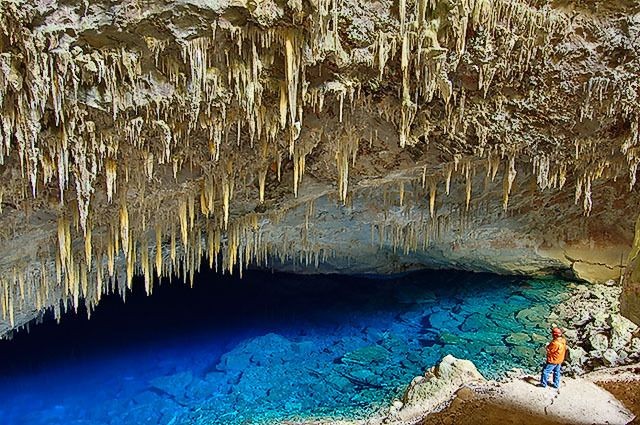
Gruta do Lago Azul, Bonito, Brazil. (photo by www.alexuchoa.com)
"Symphony of Stones" (how aptly named) -
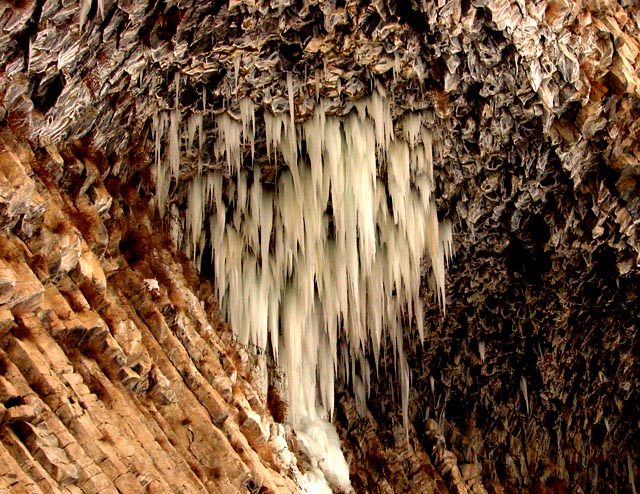
Garni caves in Armenia. (photo by eco culture)
Fairyland Cave Formations
Caves are a fairyland of delight, from the burning hot enclaves to the glacial ice mazes. Thousands of years of dripping water, eroding stone and budding minerals create a silent world of mystery and beauty... Graceful arches, giant crystals... silent but for the sound of water dripping and bubbling through.
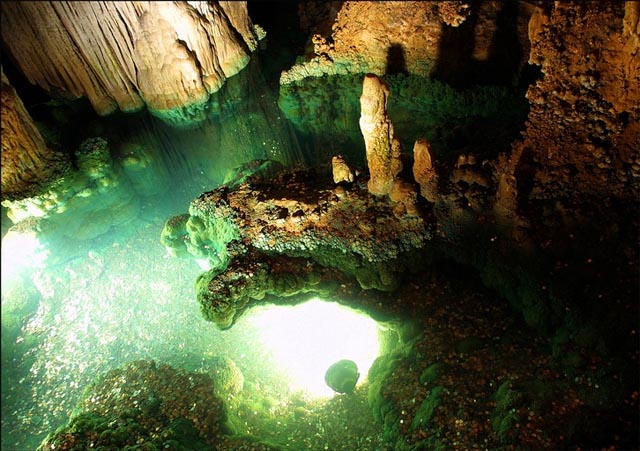
A "Wishing Well" at Luray Caverns in Virginia (photo by Declan McCullagh)
The most common type of caves form when slightly acidic rainwater trickles into the crevices of limestone and gradually widens the cracks as it dissolves the stone. Centuries of water, supersaturated with minerals, dripping from cave roofs cause stalagmites and stalactites to form (see here).
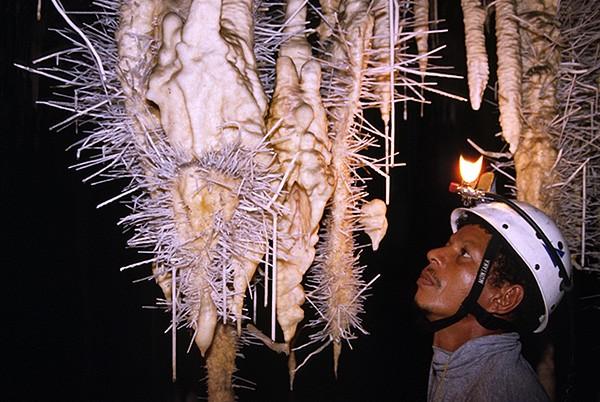
(image via)
One thing to keep in mind during cave exploration: though these structures are made of minerals, they are generally extremely thin and fragile, many of them are quite rare, and can be damaged or destroyed by touch alone. Calcite (the mineral which forms many cave structures), for example, is soft enough to be scratched by a fingernail.
Some of the cave and rock formations:
- Flowstone (also known as a Bacon formation)
- Cave Pearls
- Soda Straws
- Helictites
- Anthodites (or Aragonite)
- Bottlebrush formation
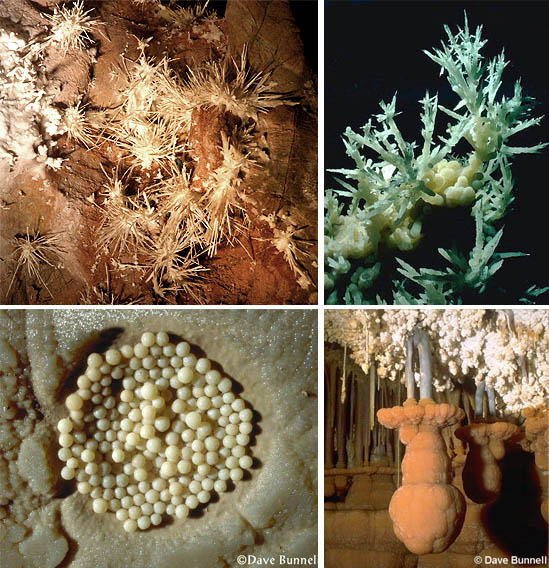
(image credit: Dave Bunnell)
Probably the most comprehensive cave-exploration site on the net is that of Dave Bunnell... You can spend hours there, wandering around pages, cataloging whimsical underground structures, oozing rock and dripping stone.
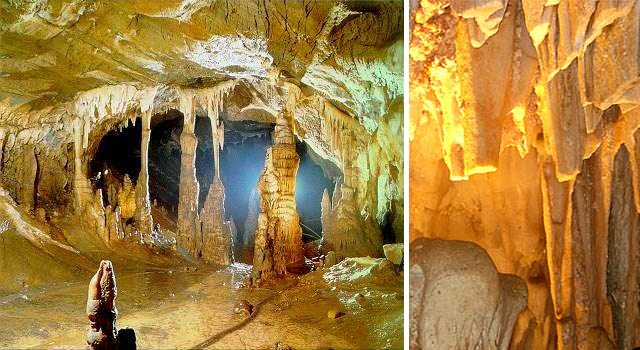
(Gruta do Mimoso, Brazil)
Largest Cave Systems
We mentioned the Jeita Grotto - the largest cave system in the Middle East- in our recent Lebanon article. The longest known stalactite in the world is found there at 8.2 meters long.
- The deepest known cave is Voronya Cave in Abkhazia, Georgia and has been explored to a depth of 2191 meters.
- The longest continuous cave system yet explored is Mammoth Cave in Kentucky, covering 591 kilometers.
Let's have a short world tour of the most interesting caves, why don't we? We'll start with North America -
Already mentioned Luray Caverns in Virginia are full of celebrated speleothems formations, calcite crystals of abnormal shapes - all formed when the chambers were completely filled with water, highly charged with acid. The acid began to eat away the softer material, resulting in ornate pinnacles and arches...
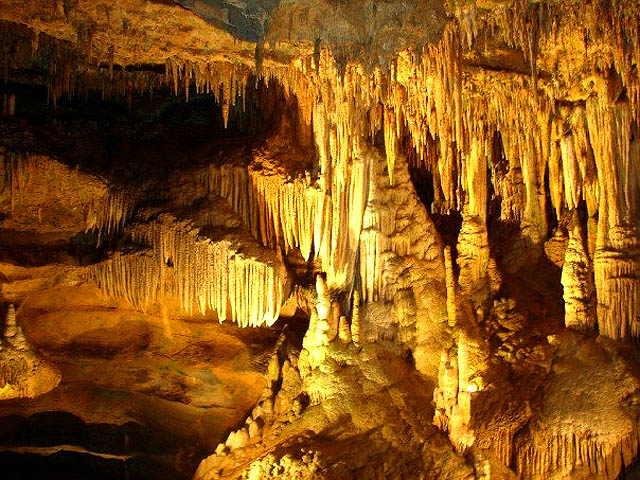
(image credit: Alejocrux)
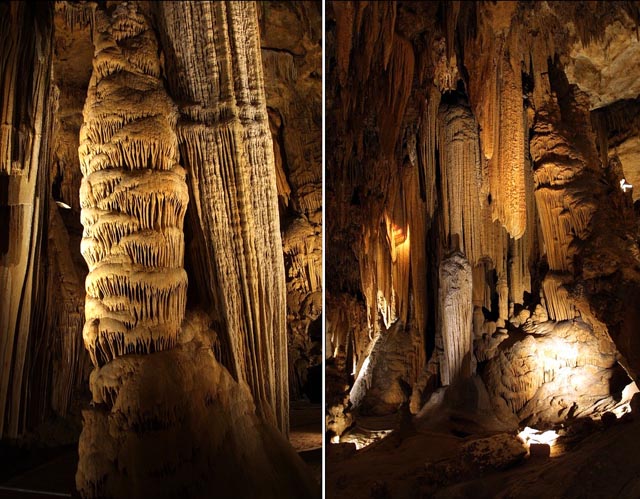
(image credit: Declan McCullagh)
One of the deepest known cave pits, Fantastic Pit in Georgia's Ellison's Cave descends 586 feet (179 meters) in a straight tunnel:
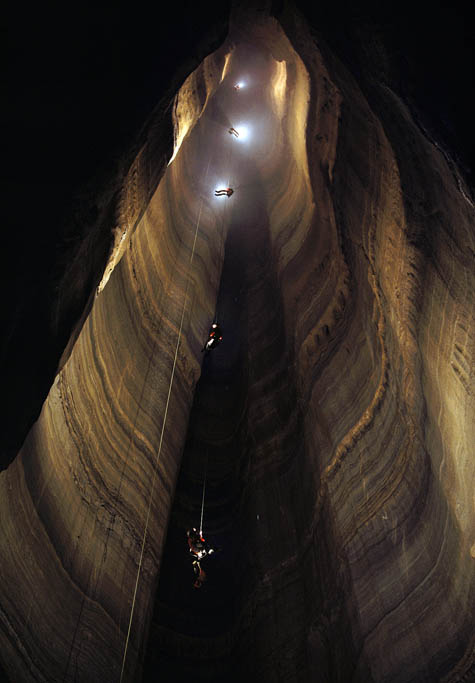
(image credit: Michael Nichols, National Geographic)
Glacial Caves and Ice Caverns
Some ice caves must rather be called "glacier caves", which can simply astound with the intensity of ice color:
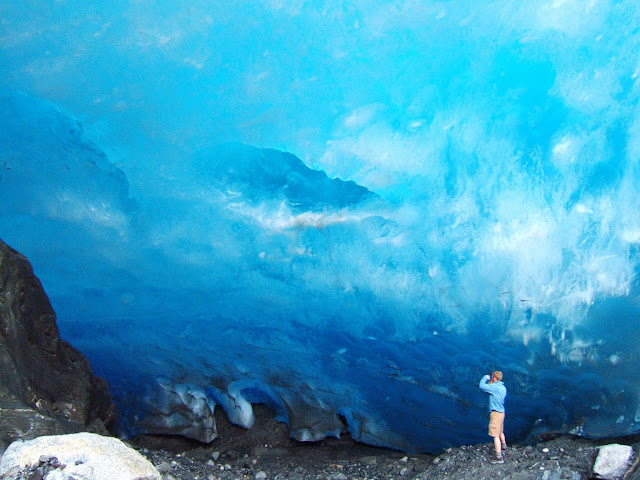
(image credit: Jenna and Tim Dickinson)
Here is a wonderful page of ice caves photography by Jason Gulley:
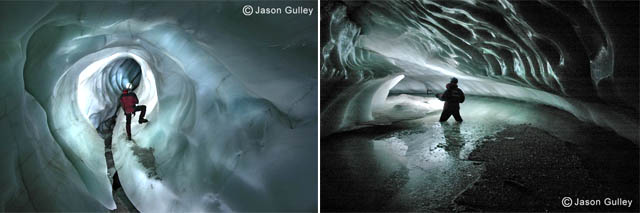
(images credit: Jason Gulley)
No sign of Superman or Megatron there yet:
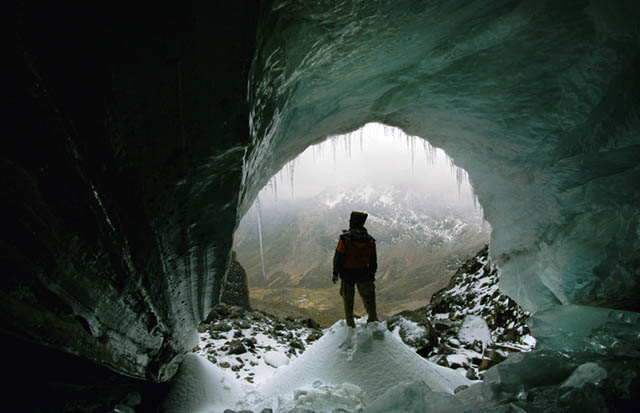
Mount Kenya's Ice Cave Bobby Model, National Georgaphic)
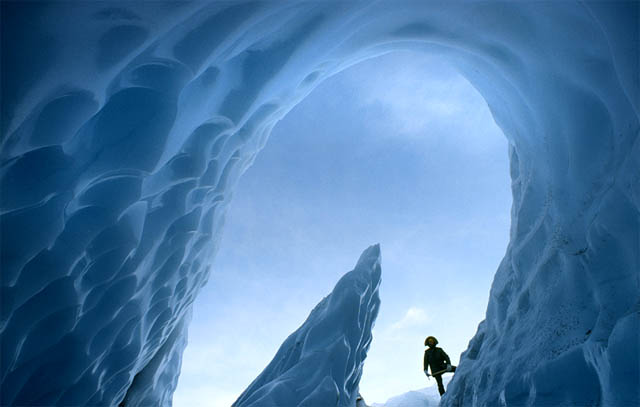
Ice Cave in Matanuska Glacier, Alaska - photo by George F. Mobley, National Geographic
A lot of ice caves grow "hair" - ice extrusions, some are quite strange-looking:

(image credit: Ian Mckenzie)
Brazil: Crystalline Underground Waters
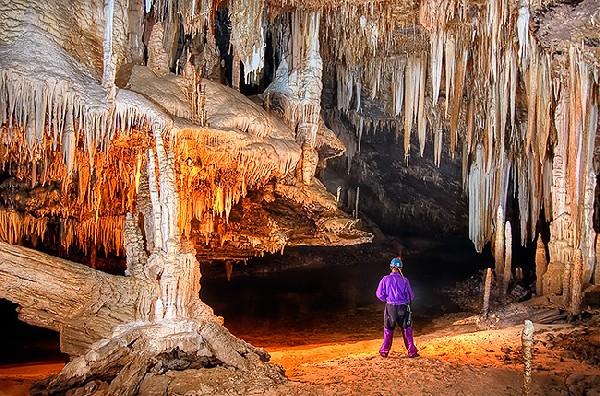
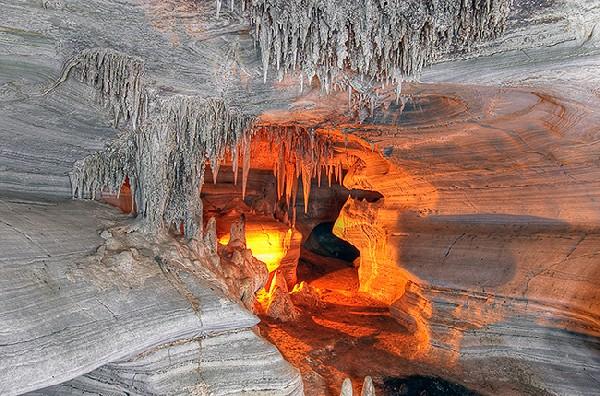
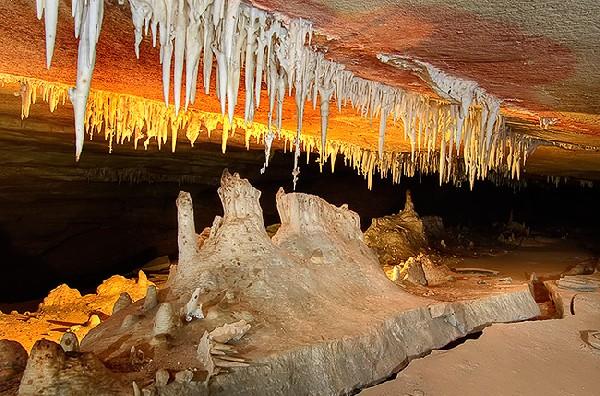
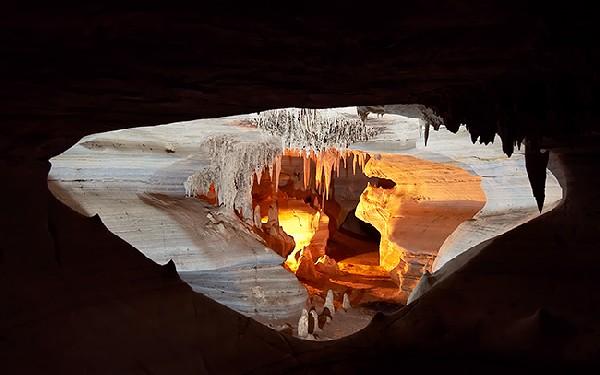
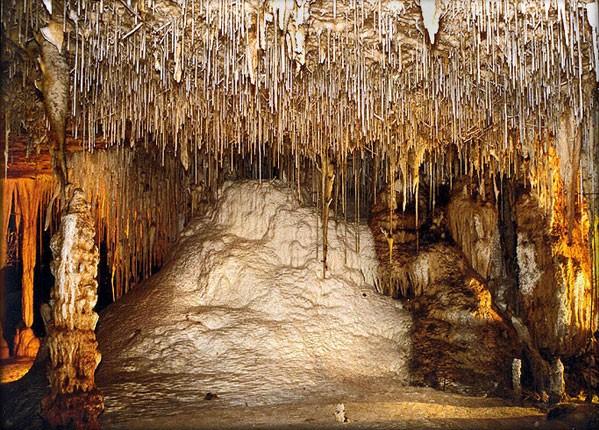
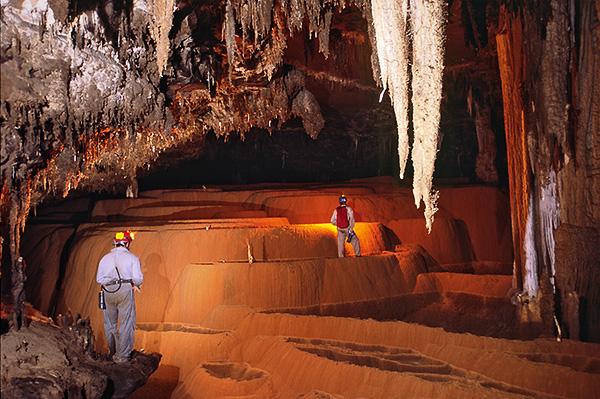
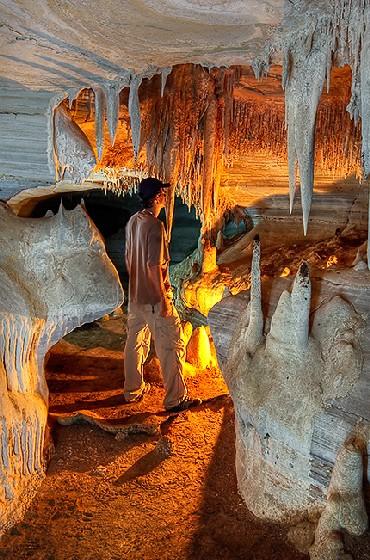
Mato Grosso do Sul region in Brazil (and especially the quiet town of Bonito) boasts many marvelous underground lakes: Gruta do Lago Azul, Gruta do Mimoso, Aquário Natural. Intricate limestone formations and grottos hide the intensely-colored pools and waterfalls (many adventure tours there feature diving, some pools are more than 100 meters deep):
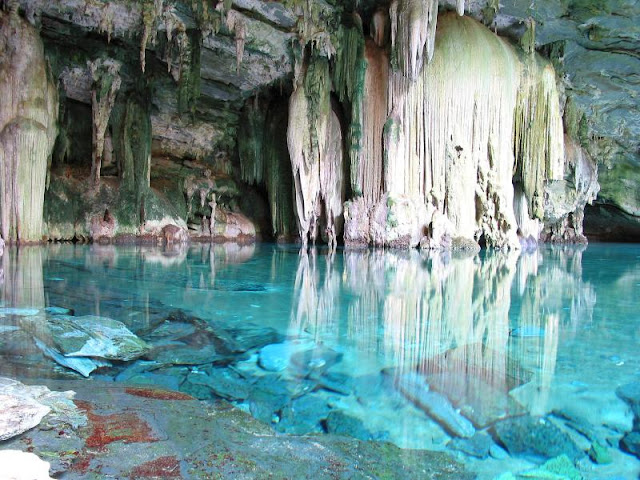
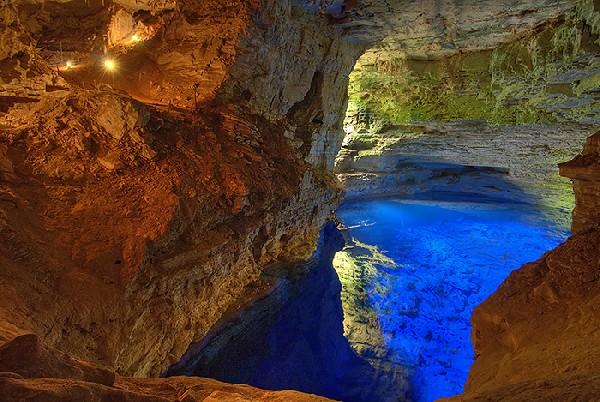
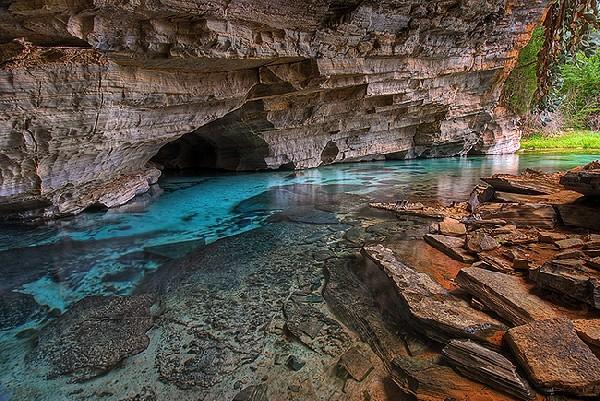
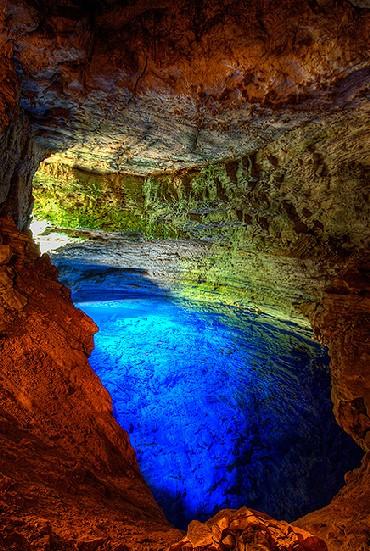
(images via)
Limestone caves in the same region offer fantastic exploration:
(images via)
Venezuela: Cave of the Ghost
Cueva del Fantasma is big enough for two helicopters to fly into it, but it's not technically a cave - rather, a collapsed gorge. It does, however, sport a huge waterfall right inside of it:
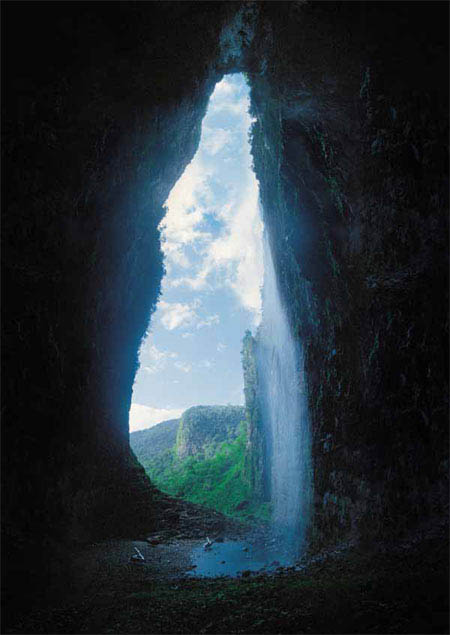
(image via)
Iran: tremendous cave system
Katale Khor is a cave dating back to the Jurassic period. It's one of the "snow caves" in the Southwest Zanjan province and connects to other caves - a huge underground infra-structure which can hide who knows what (definitely anti-American... wink wink). See more pictures here
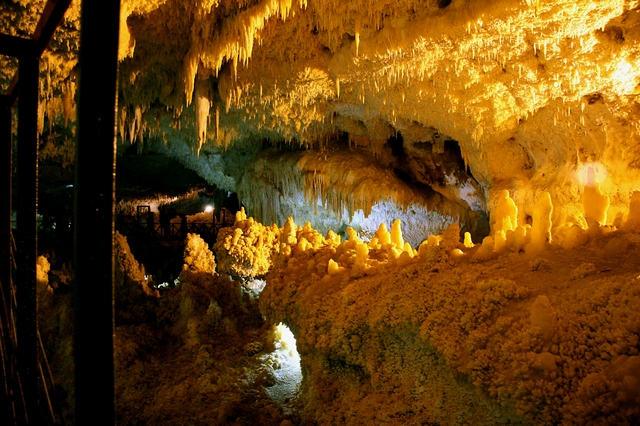
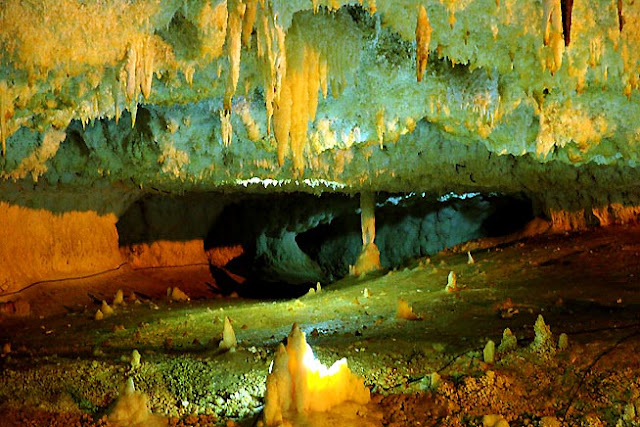
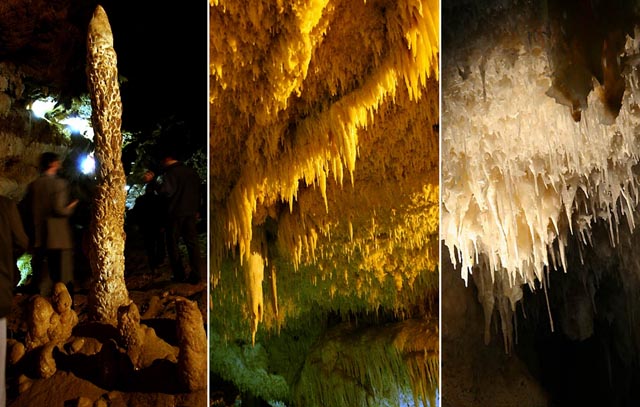
(images credit: Ali Majdfar)
Can't get enough images of Iran's natural beauty? See our previous articles... a country full of great sights and dubious politics.
Vietnam: Hang Thien Cung cave
There are plenty of caves in Vietnam, and just like in China, many are illuminated with garish colors. (see here). But sometimes even artificial light takes back stage to the incredible rock textures:
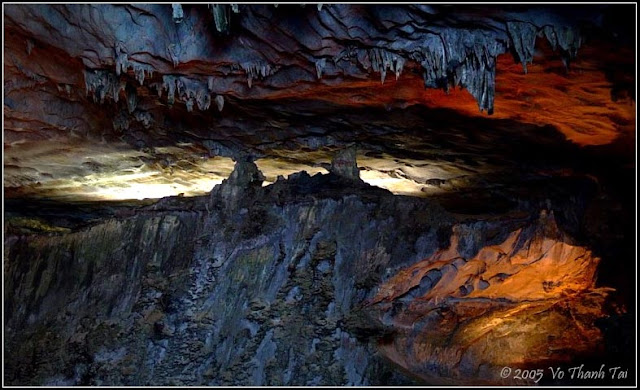
(image credit: Tai Vo)
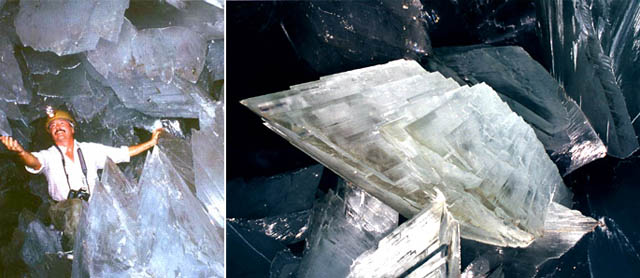
Mexico: Giant Selenite Crystals!
In 2000, one of the most unusual and splendid caves was found in Mexico by miners. Located only a mile from an upthrust of magma, this cave is 112 degrees Farenheit and at 90-100% humidity, limiting greatly the amount of time explorers can spend in it. It is a spectacular cave, with gigantic crystal formations thought to be 600,000 years old.
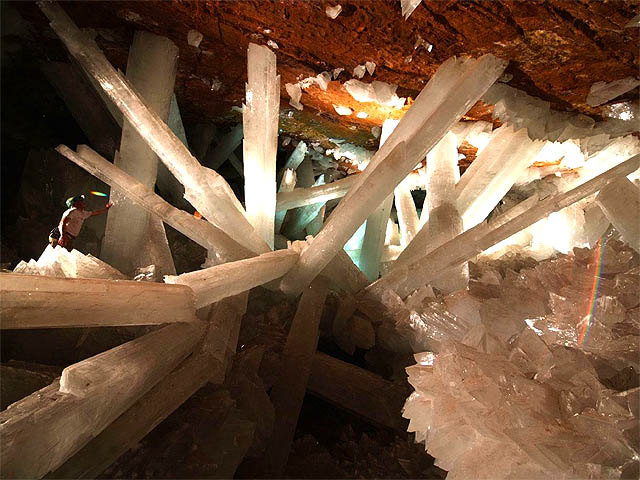
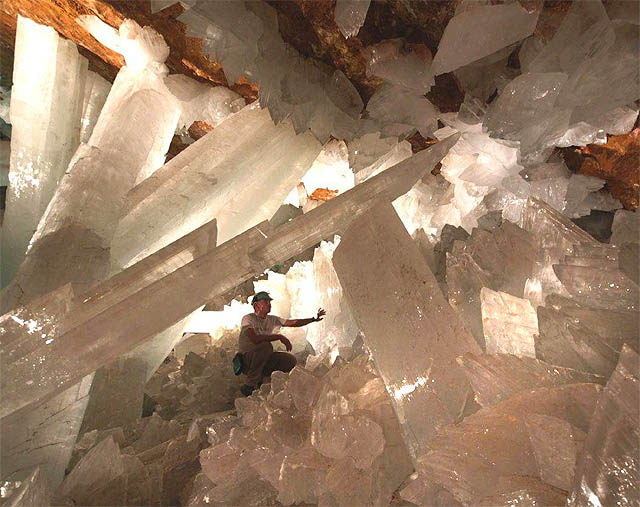
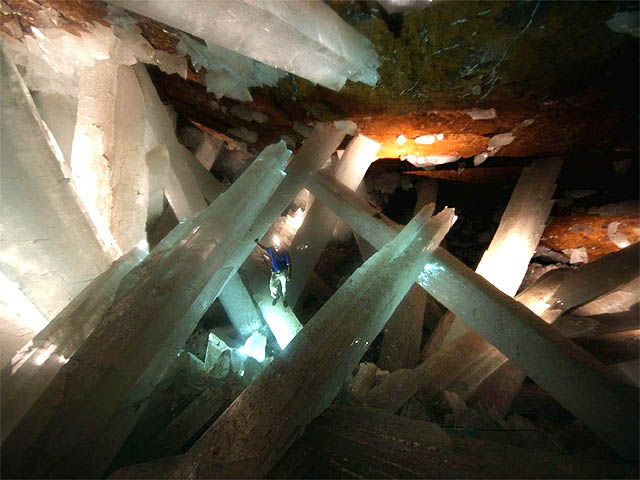
(photos by Javier Trueba / Madrid Scientific Films, image via)
The crystals formed underwater; as water saturated with calcium sulfate heated in the cavern selenite molecules crystallized and grew, undisturbed, to giant proportions. The cave was drained (by unknowing miners) in the 1980's and stopped the process of growth. Who knows what we may find further on, in the heat and water?
A description of one photographer's attempt to document this cave is here.
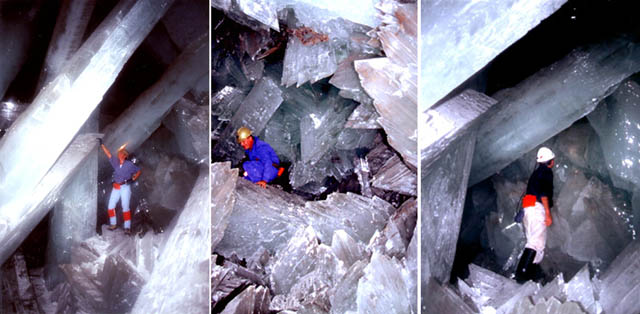
(images credit: Richard Fisher)
"It is unquestionably magical that the cool white rays of moonlight can originate deep underground in a black chamber that is, at least in my perception, white hot." (Richard Fisher, photographer, comments on the huge selenite crystals.)
A Giant Geode
Geodes are normally formed by volcanic or sedimentary geologic activity - a cavity in the rock is formed, inside which crystals begin to grow, such as amethyst, quartz or a number of others. Most geodes are small enough to fit in your hand, but this one is large enough to climb inside. The crystals found here are gypsum. - More info.
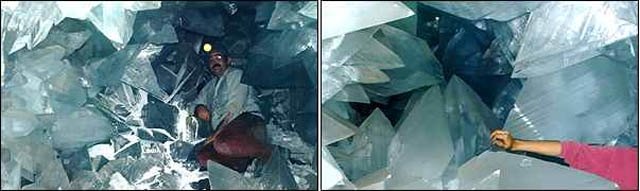
(images credit: Javier Garcia-Guinea)
The largest Geode Cave in US is located in Ohio: Crystal Cave, check it out.
Ancient Cave Cities
Khosrov Caves in Armenia served as a shelter to ancient tribes - in a perfectly cinematic location:
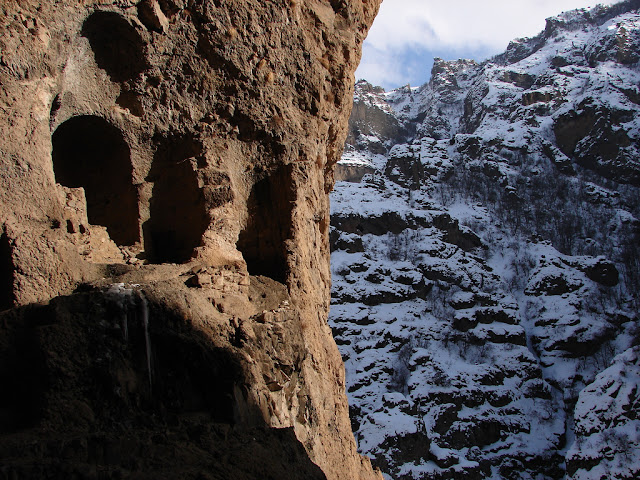
(image credit: 18:18)

(photos by Raffi Kojian and eco culture)
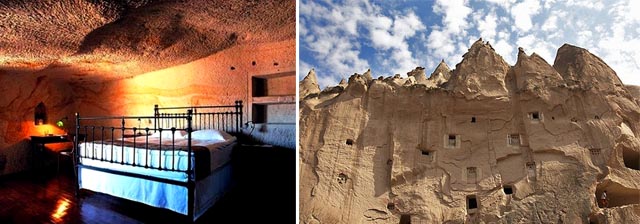
We wrote about Cappadocia cave city in Turkey before. But you might not be aware that more modern establishment makes its home there - a luxury hotel!
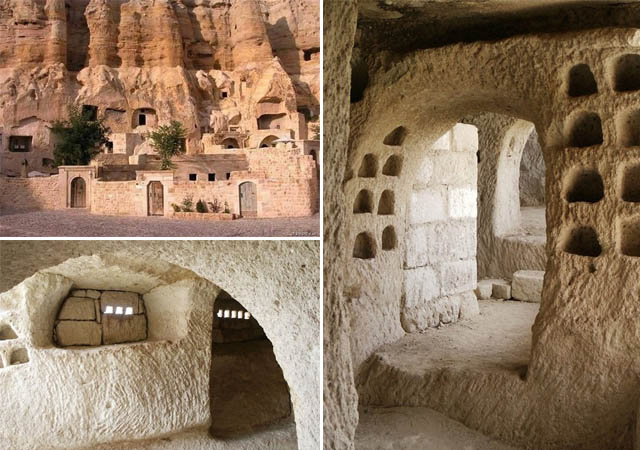
Considering how hot it can get outside, it definitely provides a welcome coolness:
(images via)
This PC case mod would fit right there, in that cave hotel room:
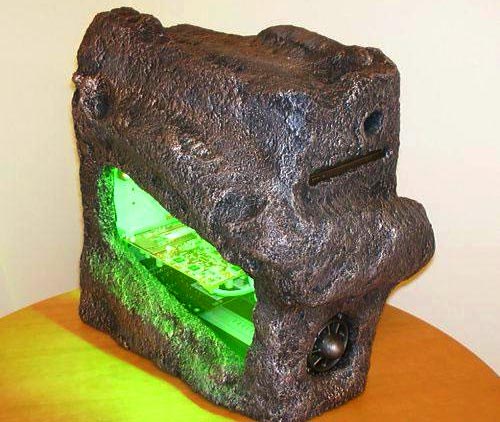
(case mod by Mashie)
Then again, there's a wildly original Stockholm subway station, seemingly built inside a natural (in reality - blasted) cave :
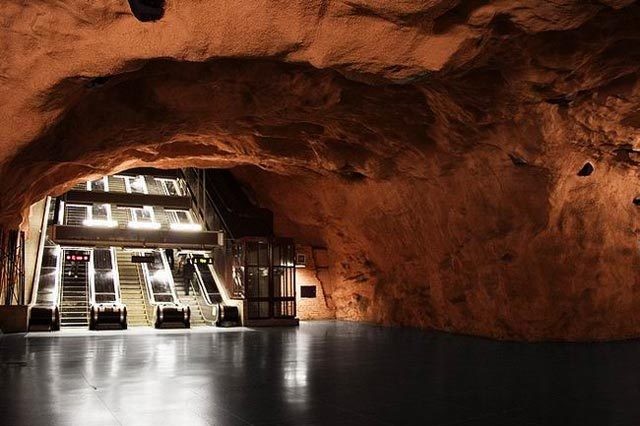
"Metro on Mars":
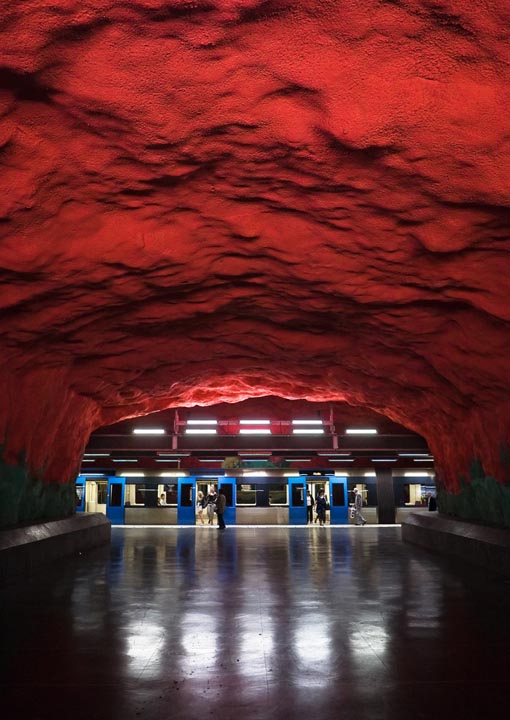
(image credit: Hannes R.)
(see if you can spot Arnold Schwarzeneggerr hiding behind a column somewhere, trying to refresh his memory)
The mystery of caves runs wild through the imagination of writers and artists. A typical adventure story might lure the hero inside some hidden world, with glimmer and sparkle, only to leave him trapped and confused. It's been said that exploring the human heart is akin to venturing into a cave: dark, mysterious realm - fraught with danger and fear - yet full of wonder and beauty.
Also Read: Psychedelic Caves
Abandoned Tunnels & Vast Underground Spaces
All images are by permission of photographers. This is on-going exploration series, please send us tips and pictures of other fantastic caves around the globe.
 Permanent Link... Permanent Link... ...+StumbleUpon ...+StumbleUpon  ...+Facebook ...+Facebook 
Category: Nature,Travel
|
|
RECENT ARTICLES:
"Dark Roasted Blend" - All Kinds of Weird and Wonderful Things, Discovered Daily!"
DRB is a top-ranked and respected source for the best in art, travel and fascinating technology, with a highly eclectic presentation. Our in-depth articles in many categories make DRB a valued online magazine, bringing you quality info and entertainment every time you visit the site - About DRB
Connect with us and become part of DRB on Facebook and Twitter.
YOUR COMMENTS::
READ OTHER RECENT ARTICLES:
CATEGORIES:
Feel-Good! | airplanes | animals | architecture | art | auto | boats | books | cool ads | famous | futurism | food
gadgets | health | japan | internet | link latte | military | music | nature | photo | russia | steampunk
sci-fi & fantasy | signs | space | technology | trains | travel | vintage | weird | abandoned
|
|
















































































 |
|


23 Comments:
Love this post,fantastic images!
Caves: intense wonder and beauty in a package!
Thank you Avi, fantastic images, I would love to visit all of those caves!
The Stockholm Metro station, Solna Centrum, is not built inside a natural cave. The station were blasted into the primary rocks, then liquid concrete were flushed to the walls. This technique were new and quite popular during the 70's.
There is actually quite a number of subway stations like that in Stockholm city. I havent really encountered the similar use of the natural rock covered in concrete in the subway design anywhere else than here at home actually. Though none of them are natural caves, but tunneled/blasted. Most of them feature some sort of painting on the "cave" walls. Though there is "Kungsträdgården"(featured here before i think) that is totally crazy in its decoration, really cool. Its a pity its on a line i rarely ride :(. If i was intereseted in photography and did own a decent camera maybe i would have tried submitting some pics of the different stations.
I am quite sure the cool approach in our subway layout is not intentional though but just something considered to be a practical way of doing it at the time.
Hmm...the author must be rather easily impressed...
These aren't even mediocre photos of these cave structures....
Mato Grosso do Sul is a province, not a town. By the way, very nice places! I live in Brazil and I intent to visit some of the brazilian caves this year.
FYI, the computer case is from
http://mashie.org/casemods/asteroid1.html
Super Awesome post. I've always loved caves. But in a way they always creeped me out too. I would like to see more posts on caves please:)
Neat info all, post updated. Thank you!
Wow. I have a real urge to go into a cave right now! That one that went really deep is crazy. I would love to scale down that one.
Fantastic caves, fantastic pictures. I want recomended you a spanish cave named "El Soplao" and over all his excentrics stalagmites.
http://www.elsoplao.es/itinerario.htm
Thank you for the blog.
If you notice on the Cueva del Fantasma pic, you'll see two tiny things in the bottom, near the lake. Those are the actual helicopters. I live in Venezuela and have been there. It is really breathtaking.
You made me had a "Total Recall" on that last pic.
There is no words to express. simpppppply suuuuuperb
You should find pictures of The Choranche cave in France (Vercors Dept : 38) you'll can see very rare and the thinest stalagmites in Europe !!
Don't miss this cave if you are ever in southern Arizona!!! http://www.explorethecaverns.com/cave.html
other great cave pictures here:
http://www.picturestoryblog.com/2008/12/high-water-sub-solomon-cave-tennessee.html
and look for Earth from Below
wow very cool
Extremely inspiring and amazing work. You are amazingly creative!! Thanks for sharing.
Great photos. Where did you get this idea? good work.
Nice collection. I believe that one pic is badly identified, tho. This one seems to be of Poco Encantado in Chapada Diamantina, Brazil (northeast): http://lh6.ggpht.com/abramsv/SQde_tocAkI/AAAAAAAAi00/3H-tDGkaWuU/s1600-h/10053456456ethgf.jpg
these are sickkk
Hello
http://www.youtube.com/watch?v=ezeXNOJvv7I - here is another one - Berkowa Cave in Poland - Fat man has no chance :)
Flinston
Post a Comment
<< Home