






































 "QUANTUM SHOT" #243 "QUANTUM SHOT" #243Student housing taken to the extreme We all know that Japanese have developed the art of living in small spaces. They have capsule hotels, so why not have capsule student housing? The big difference is that in hotels you only stay for one night, but a house is supposed to be more permanent. These units have adequate space for a person, are pretty high-tech, well-equipped and easy to maintain - just don't invite any friends... 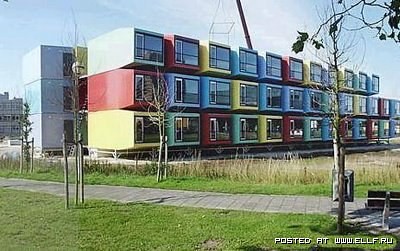 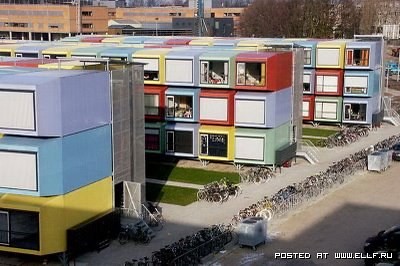 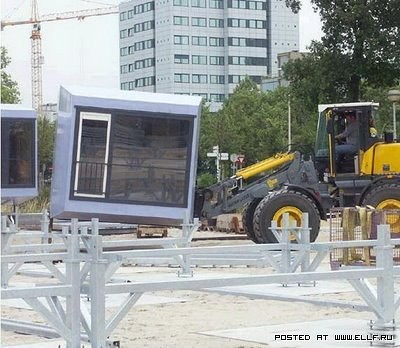 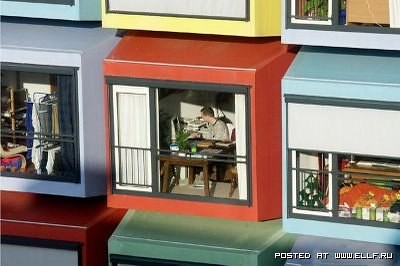 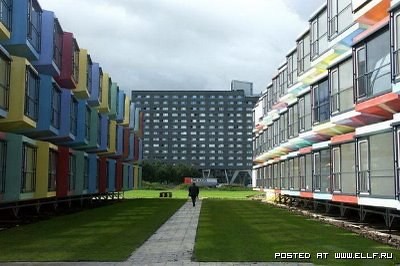 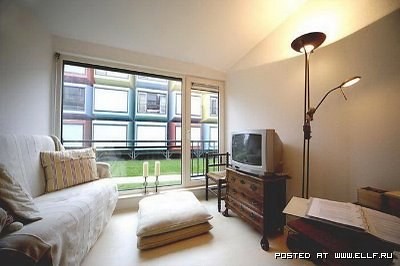 The student village shown above is located on the University grounds "De Uithof" in Utrecht, Netherlands. (see here) Student O2 Village - Integrated with Natural Environment The Technical University of Munich in Germany (together with M-Ch "Micro-compact home") decided to install these units in 2006 - with students and professor to live in it for a 6 months term period. The results of this experiment - all six occupants living there have extended their stay for the full academic year. (See their site) 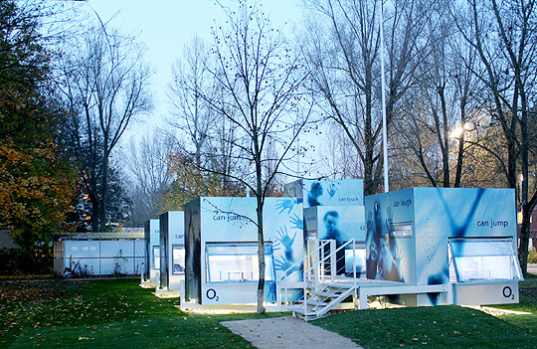 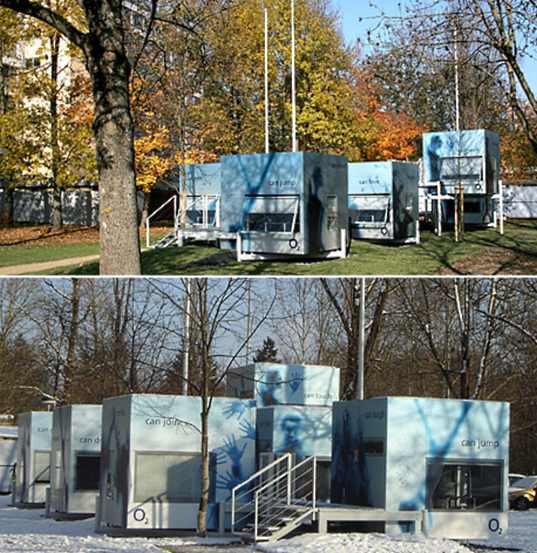 "Each 2.65m cube features high technology, including broadband and standard internet links a plasma screen and high quality kitchen and bathroom appliances, some provided by co-sponsors, Siemens." 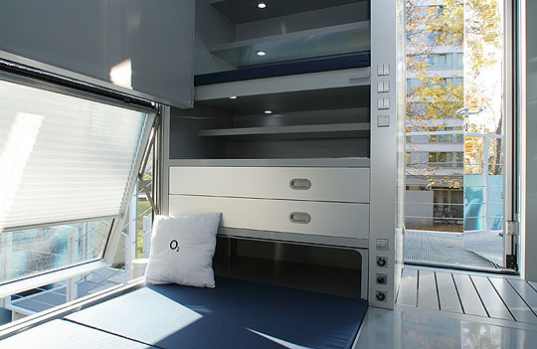 (images credit: inhabitat.com) First Capsule Building Not only students can "enjoy" living in modular, or capsule-like apartments. The whole "capsule living" idea started with this project, built in 1970 in Tokyo: 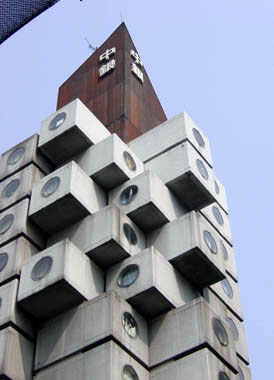 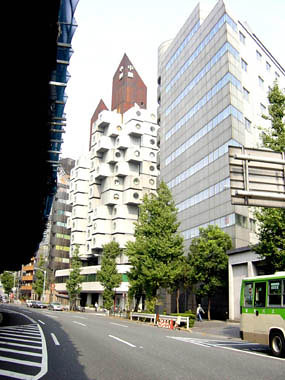 The Nagakin Capsule Tower, designed by Kisho Kurokawa, has been originally intended as a capsule hotel, but then been converted to apartment modules. The 14-story high tower has 140 capsules stacked at angles around a central core. Every unit is detachable and replaceable. Kurokawa designed units to be replaced after 33 years, but this hasn't happened. Currently the building is in process of restoration, but some people call for its demolition, so have a look while this piece of architecture history is still there: 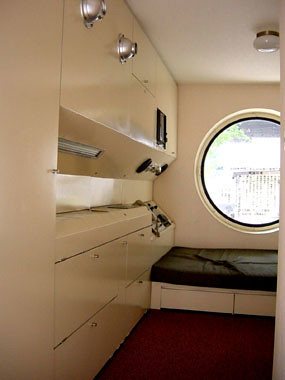 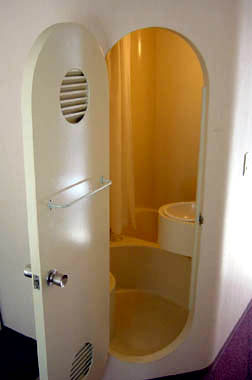 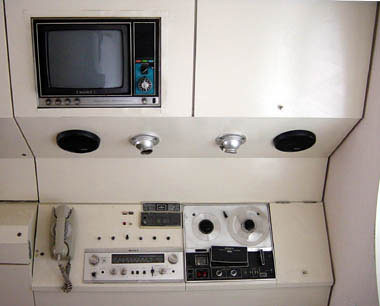 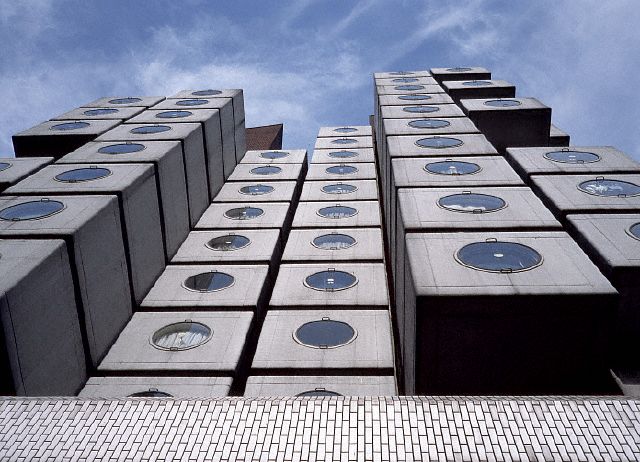 (images credit: Arcspace.com) UPDATE. Alan pointed out that capsule housing development really started with "Habitat" project built in Montreal for Expo 1967. We know about this masterpiece, but really plan to dedicate an individual post to it. (it's that good) It's probably all right for a short stay, no more than a couple of nights, being very economical in the high-price Tokyo environment. One day you'll crawl inside one such high-tech coffin, get on the internet, and get sucked into the Matrix. We only hope the hotel chain got an insurance against that. Reversible-Destiny Lofts - add color to your living These cute looking (almost like a child's toy blocks) apartments are located in Mitaka, a suburb of Tokyo, Japan. They were designed by Japanese artist Shusaku Arakawa and French poet Madeline Gins. (see the project's site) 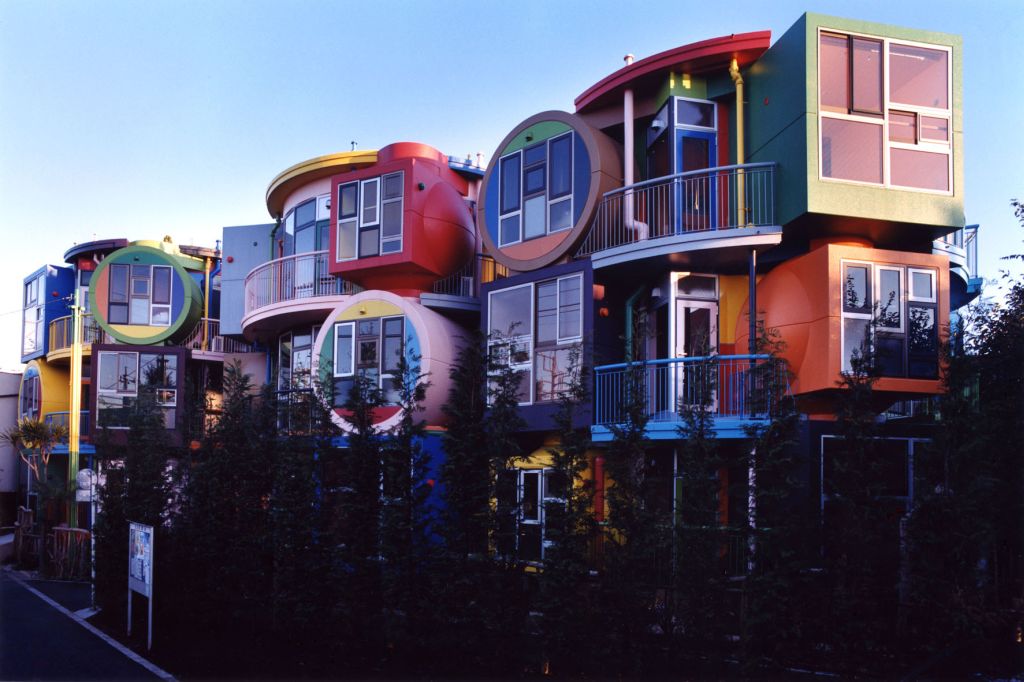 (image credit: Sushi & Sensibility) The original concept is not only playful, it changes the occupant's life in the interesting ways, some of them quite confusing: "Painted in eye-catching blue, pink, red, yellow and other bright colors, the building resembles the indoor playgrounds that attract toddlers at fast-food restaurants. Inside, each apartment features a dining room with a grainy, surfaced floor that slopes erratically, a sunken kitchen and a study with a concave floor. Electric switches are located in unexpected places on the walls so you have to feel around for the right one. A glass door to the veranda is so small you have to bend to crawl out. You constantly lose balance and gather yourself up, grab onto a column and occasionally trip and fall." 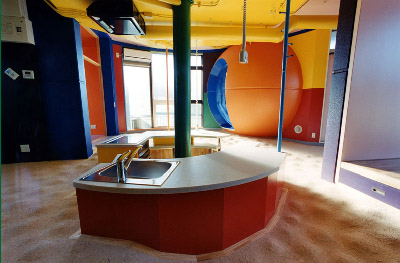 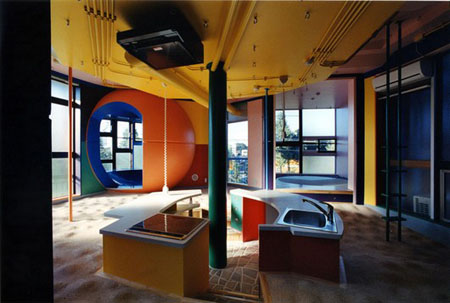 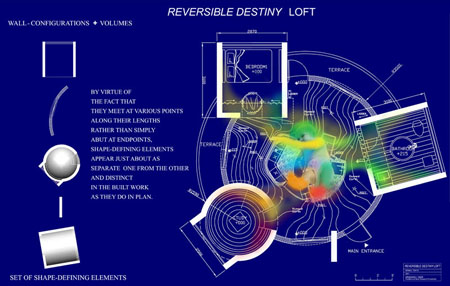 (images credit: myninjaplease) Arakawa and Gins hope to start a revolution in the way communities look and live - and not only in Japan. They are currently in talks with official in Paris and New York to build "Hotel Reversible Destiny" and develop new plans for whole city blocks (with every module pre-assembled in Japan) 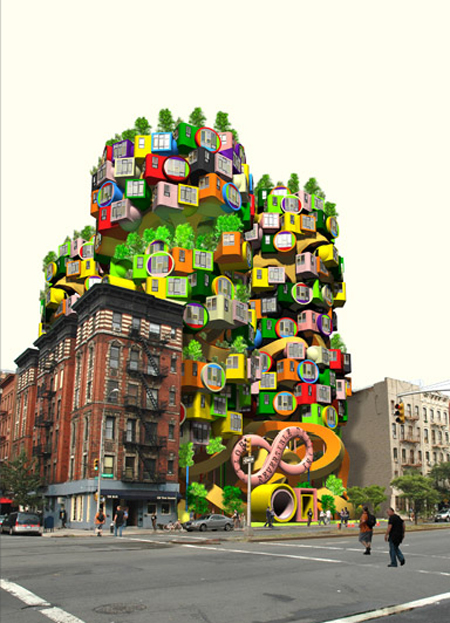 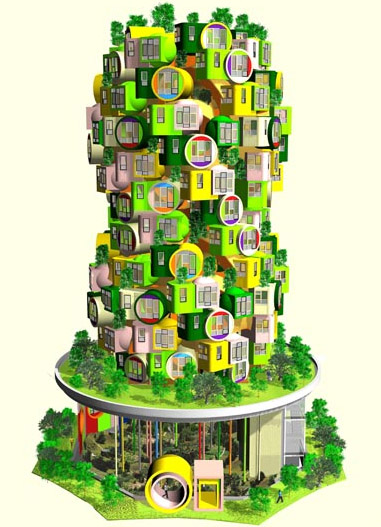 (images credit: Reversible Destiny) Currently the prototype housing project has quite prohibitive prices, close to $800,000 per unit - but celebrities and big shots in Japan are snatching them up, so certainly the interest is there, which shows how many people are willing to live on sloping floors and don't even mind having a closet. Permanent Link... Category: Architecture Related Posts: The Rotating City Environmentally-Friendly Houses |
Scroll down for comments:
|
|
6
comments
 |
|
RECENT ARTICLES:

|
Visual Caffeine #8 Visual Caffeine, Issue 8 A thrilling blend of art, myths and technology |

|
Visual Caffeine #7 Visual Caffeine, Issue 7 A thrilling blend of art, myths and technology |

|
Art Deco Imperial Dreams: Art Deco Update Wings, Gears, & Glamorous Ladies |

|
1970s SciFi DRB Pics-of-the-Day Grand Space Adventure 1970s Art |
"Dark Roasted Blend" - All Kinds of Weird and Wonderful Things, Discovered Daily!"
DRB is a top-ranked and respected source for the best in art, travel and fascinating technology, with a highly eclectic presentation. Our in-depth articles in many categories make DRB a valued online magazine, bringing you quality info and entertainment every time you visit the site - About DRB
Connect with us and become part of DRB on Facebook and Twitter.
YOUR COMMENTS::
|
|

|
SF ART & BOOK REVIEWS: Don't miss: The Ultimate Guide to NEW SF&F Writers! Fiction Reviews: Classic Cyberpunk: Extreme Fiction Short Fiction Reviews: Lovecraft's "At the Mountains of Madness" (with pics) New Fiction Reviews: The Surreal Office |
READ OTHER RECENT ARTICLES:

|
Abandoned, Dieselpunk DRB Pic-of-the-Day Abandoned: Streamlined Three-wheeler |

|
Visual Caffeine #6 Visual Caffeine, Issue 6 A thrilling blend of art, myths and technology |

|
Visual Caffeine #5 Visual Caffeine, Issue 5 A thrilling blend of art, myths and technology |

|
Hellish Weather on Other Planets
Wild, Untamed, and Uncut |

|
Medieval Suits of Armor
Metal Body Suits vs. Weapons of Medieval Destruction |

|
World's Strangest Theme Parks
Amusement to the (twisted) extremes! |

|
Enchanting Victorian Fairy Tale Art
"Then world behind and home ahead..." |

|
Adorable Pedal Cars
Collectable Pedal Vehicles Showcase |

|
Japanese Arcades: Gundam Pods & Other Guilty Pleasures These machines have gone up to the next level |

|
Modernist Tallinn Architecture Delicious blend of old and new! |

|
Early Supercomputers: A Visual Overview "Computers in the future may weigh no more than 1.5 tons" |

|
Futuristic Concept Cars of the 1970-80s French, Italian & Japanese rare beauties |

|
Epic 1970s French Space Comic Art DRB Time-Slice: Valérian and Laureline |

|
The Trees Are Escaping! The Abandoned Prison in French Guiana "Great Escape" from the Devil's Island |
|
FULL ARCHIVES (with previews, fast loading): 2022/16 2015/14 2013 2012 2011 2010 2009 2008 2007 2006 Link Lattes Feel-Good & Biscotti Issues |
|
CATEGORIES:
Feel-Good! | airplanes | animals | architecture | art | auto | boats | books | cool ads | famous | futurism | food
gadgets | health | japan | internet | link latte | military | music | nature | photo | russia | steampunk
sci-fi & fantasy | signs | space | technology | trains | travel | vintage | weird | abandoned


6 Comments:
The first project looks very much like the studenthousing for the technical university in Delft, the Netherlands.
http://www.duwo.nl/eCache/ENG/1/764.html
Those Reversible Destiny units don't look handicap accessible by any means. what an interesting concept, though.
I don't think it started in 1970. I saw a modular housing development in Montreal in 1967, called Habitat. Google "habitat 67 montreal" and click on images.
thanks Alan,
I updated the post
These are the good looking ones. There are some shipping container ones that are elegant as well. This link is a rather grim reality:
http://www.photomichaelwolf.com/100x100/
100 10' x 10' apartments in Hong Kong.
I see nothing grim about the pics in the michaelwolf link. Humble--yes. Spartan--absolutely. But grim--only to the eyes of a spoiled westerner who associate the size of one's living space with his/her self-worth. Many of the rooms featured there are probably cleaner and more orderly than your apartment noh?
Post a Comment
<< Home