
Most of us are familiar with pianos, guitars, drums, the wind and percussion instruments that make up many orchestras, plus many others. However, considering the multitude of different cultures that exist on our planet, its not surprising that mankind has also managed to come up with some pretty unusual musical instruments over the course of history. Here’s a look at some of the little known, odd, forgotten and at times bizarre looking instruments from around the world.
(steampunk styled guitar, by Lirio Salvador of the Philippines, more info)
This is the Pikasso, and it certainly looks like something the renowned surrealist artist would have devised. The Pikasso took two years to build, has four necks and 42 strings in total and you probably need more than two hands to play it:
(left: Pikasso Guitar; right image: unknown fantasy-style, via)
The zither, an instrument with strings stretched over a resonating wooden box, is familiar to some people as a result of its use in the 1949 movie The Third Man (listen here), but the instrument has been largely forgotten since that time.
The Erhu from China is similar to a Chinese violin, with a base that is more oblong in shape. The word Erhu can be roughly translated into English as a ‘southern fiddle’. The small sound box at the bottom of the instrument is covered with... python skin:
The Harp Guitar, while not being that well known, has in fact been around for at least two hundred years. It’s basically an acoustic guitar with an additional neck containing strings like a harp:
(the Wingert guitar, the Knutsen guitars and the Gibson harp guitar - images via 1, 2)
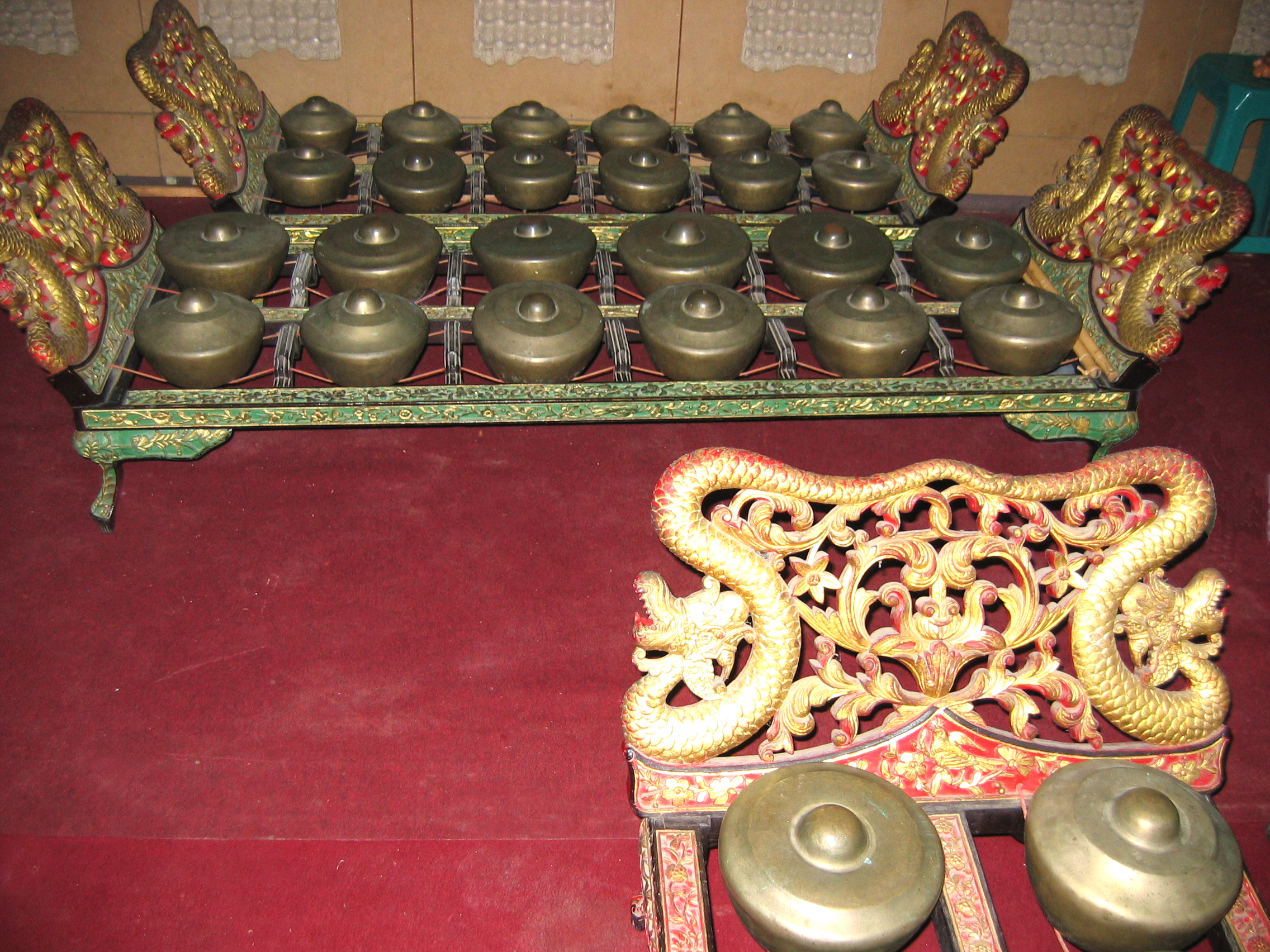
The Javanese Bonang has a wooden frame on which brass gongs are strung together. The brass heads are struck with padded sticks to create the desired sound and tone:
The alphorn, alpenhorn or alpine horn is mostly associated with Switzerland and the Alps, but similar wooden horns have been used in most of Europe’s mountainous regions over the centuries:
This variety of trumpet called the wakrapuku is made from metal or cattle horn and is a very old instrument, dating back to pre-Columbian times in the Andes:
The clavichord, which could be described as a tabletop piano, was invented in the early fourteenth century and was very popular from the 16th century to the 18th century, when the piano first appeared. The clavichord was almost forgotten by 1850, but enjoyed a revival among enthusiasts at the beginning of the twentieth century:
The distinctive humming of the didgeridoo from Australia is so closely associated with the land down under. The instrument is made from eucalyptus wood that’s hollowed out by termites and dates back over 1500 years:
Uillean Pipes and are type of bagpipes, used in traditional Irish music. The pipes are not blown into like the Scottish version, but instead the right elbow operates bellows, which pumps up a bag at your left elbow. This then produces the air for the instrument’s seven pipes:
The Kaval is a type of flute used at various times by musicians in Armenia, Azerbaijan, Bulgaria, Macedonia, parts of Northern Greece, Romania, southern Serbia and Turkey:
The bombard is similar to an oboe and is used in Breton music in Northern France. The bombard is apparently very loud and requires so much breath to play, that the player needs a rest after as little as ten seconds:
The ocarina is a very ancient flute-like instrument, dating back at least 12,000 years. Instruments of this type were known in ancient China, but the Spanish first introduced the ocarina into Europe after their conquests in Central and South America in the sixteenth century. It became known as a toy instrument for children, only capable of playing a few notes, until the modern version of the ocarina was developed in Italy in the mid-nineteenth century:
The three-string Shamisen from Japan is a little like a banjo, but with a smaller base and slimmer neck. It developed from the smaller Sanshin, the body of which is covered in python skin, which originates from Okinawa and the Ryukyu Islands. The shamisen is used in Japanese folk music and is popular with street performers:
So that’s our second look at some of the world’s more unusual musical instruments (read the first one here). Be sure to join us here at Dark Roasted Blend for Part Three.
Bonus: Brazilian radio station KISS FM invented a cassette-tape musician, who can play standard instruments to their hardest rock potential:
It's Uilleann. There are two 'n's in the word. The pipes have three drones (the things sitting on the shoulder of Scottish pipers) and the keyed bits you can see are called 'regulators'. Those are played with the wrist while the hands play the chanter, which is the pipe separated from the others. Sorry, but I had to say something about the spelling. The rest is just me being pedantic.
I seem to recall seeing that the "mystery image" at the bottom was a human version of the "mouse organ" from the monty python sketch - basically pressing a key on a keyboard signalled one of the people in the boxes to make a noise (I can't remember if they were actually made to scream, but it seems unlikely)
The bottom image is of a specific form of punishment where the men were not allowed to see one another, ever. The only outlet was pious singalong. You can see they cannot see one another in any way. The men screamed very loudly and were most enthusiastic. This pleased whichever deity was in fashion that century.
The last image is indeed from a prison. I don't remember if they are watching a priest or listening to a political speech, but it was something like that - let all the prisoners see and hear, but not talk to each other. Definitely not music-related.
Someone once joked that it is a set of experimental toilets :-).
I don't know about some of those instruments...but I would definitely like to get my hands on some of those guitars. The Steampunk Guitar looks particularly awesome to play.
Why isn't Harry Partch mentioned? He made some of the weirdest musical instruments (and music) ever: http://cosmicmachine.blogspot.com/2011_09_25_archive.html
It's not the satellite imagery that's distorting the views in Google Earth, but that Google Earth doesn't understand the concept of a bridge, and renders the satellite image down onto the terrain surface
Oriental dragons are not evil -contrary to western ones-, they are deities, and "traditionally symbolize potent and auspicious powers, particularly control over water, rainfall, hurricane, and floods. The dragon is also a symbol of power, strength, and good luck"!
I believe that the Google Earth problem stems with issues regarding draping a 2D image or photo over a 3D triangulated irregular network. This can be a common problem in GIS.
Thank you Charlie - we changed the text to better reflect the words of the artist: "When we are threatened by evil, "it" will appear before us in the form of the dragon and prevent the evil with its fierce face and roar then bring peace to us. After that, "it" will transform into the form of the flower to continue quietly watching our peaceful life."
Cranes of this type have experienced some fatal accidents, in which the boom snapped off. All booms of these cranes have been recalled to the factory for solving this production error.
I feel kind of proud about the creativity of people from my country being Russia. Large part of the photos, from one third to a half, suggests that they are taken here.
Exodus 20:25 - And if thou wilt make me an altar of stone, thou shalt not build it of hewn stone: for if thou lift up thy tool upon it, thou hast polluted it.
No one does ostentatious like a church. You just can't compare.
After all, it's not like they pay taxes or spend their money on anything. Well, except on gag orders for when their priests decide to get frisky with the 8 year olds.
Sorry, Jewels, but these are pulpits; not altars. An altar is something on which sacrifices are made. Pulpits are used for long-winded sermons where the sacrifice is the time wasted by those listening to them. Further, if you study the rest of your bible, you'll find that the first and second Temples themselves, as well as the Tabernacle in the wilderness, were ornately decorated with gold and rich ornamentation.
Regarding the fish in those delightful French posters, the french refer to April Fools as "Poisson d'Avril", literally translated as "April Fish". Why? No idea, but that probably explains the fish.
We, French (but also Belgium and Swiss), use to discretely stick a paper fish in the back of people. Why a fish ? There is no definitive statement about that. Mostly historical stuff, about January becoming the first day of the year instead on April. But people continue to offer present for that day. But the present is no longer a real gift, but a joke, a fish, when the seasons of fishing is over.
Here, in Québec, we call someone that will believe almost anything a "fish". So on April's Fool (Poisson d'avril), if you get pranked, and you believe that prank to be true, you're called a "poisson" (fish). I do not know if the french use that expression.
re: Poisson d'avril - French April fools... remember The French Connection? In the opening scene, Popeye gets a tip that drugs will be hidden in a delivery of fish for the fish market of Marseilles. In the midst of gutted fish the police Commissaire asks what day it is... April 1st!! No drugs, cops got fooled by the bad guys.
11 Comments:
It's Uilleann. There are two 'n's in the word. The pipes have three drones (the things sitting on the shoulder of Scottish pipers) and the keyed bits you can see are called 'regulators'. Those are played with the wrist while the hands play the chanter, which is the pipe separated from the others. Sorry, but I had to say something about the spelling. The rest is just me being pedantic.
That Kiss radio ad is actually some CG work done by this artist here. http://duque.cgsociety.org/gallery/
I seem to recall seeing that the "mystery image" at the bottom was a human version of the "mouse organ" from the monty python sketch - basically pressing a key on a keyboard signalled one of the people in the boxes to make a noise (I can't remember if they were actually made to scream, but it seems unlikely)
In Soviet Russia, you don't listen to instrument, instrument listen to you!
The bottom image is of a specific form of punishment where the men were not allowed to see one another, ever. The only outlet was pious singalong. You can see they cannot see one another in any way. The men screamed very loudly and were most enthusiastic. This pleased whichever deity was in fashion that century.
And thus we enjoy a crime-free Russia today.
The last image is indeed from a prison. I don't remember if they are watching a priest or listening to a political speech, but it was something like that - let all the prisoners see and hear, but not talk to each other.
Definitely not music-related.
Someone once joked that it is a set of experimental toilets :-).
The "Steampunk Guitar" at the top is a working assemblage sculpture by Lirio Salvador of the Philippines.
Thank you about this info. Article updated.
I don't know about some of those instruments...but I would definitely like to get my hands on some of those guitars. The Steampunk Guitar looks particularly awesome to play.
Why isn't Harry Partch mentioned? He made some of the weirdest musical instruments (and music) ever: http://cosmicmachine.blogspot.com/2011_09_25_archive.html
Well apparently this site didn't post the entire address, but just Google "Harry Partch" and you will see what I mean.
Post a Comment
<< Home