






























Loud, Obnoxious, Steam-powered Geek-Dreams on Wheels
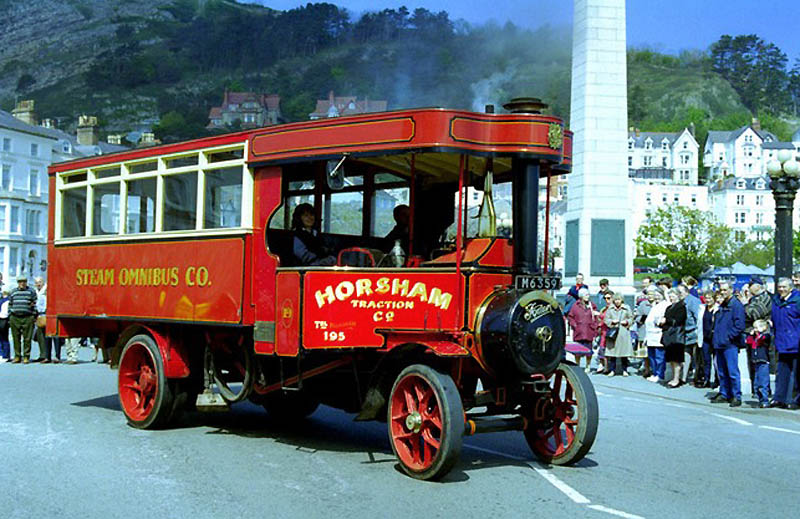
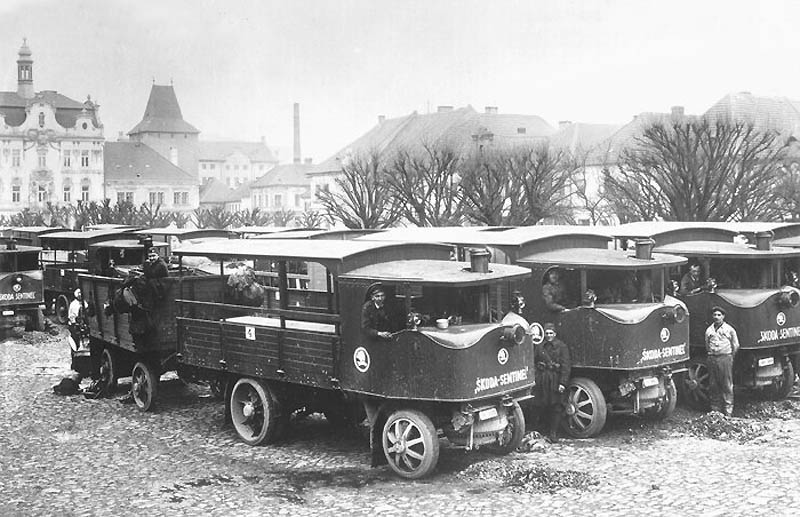
Not always detailed in brass, but nearly always surrounded by clouds of noxious steam (which adds to the mystery), these Victorian monster transports could seat many passengers in (dubious) style - but more importantly, they were not confined to rails and could go anywhere. Today, you can rent them for your next romantic outing, but don't forget to supply your date with good goggles.
(image credit: ImageStudio)
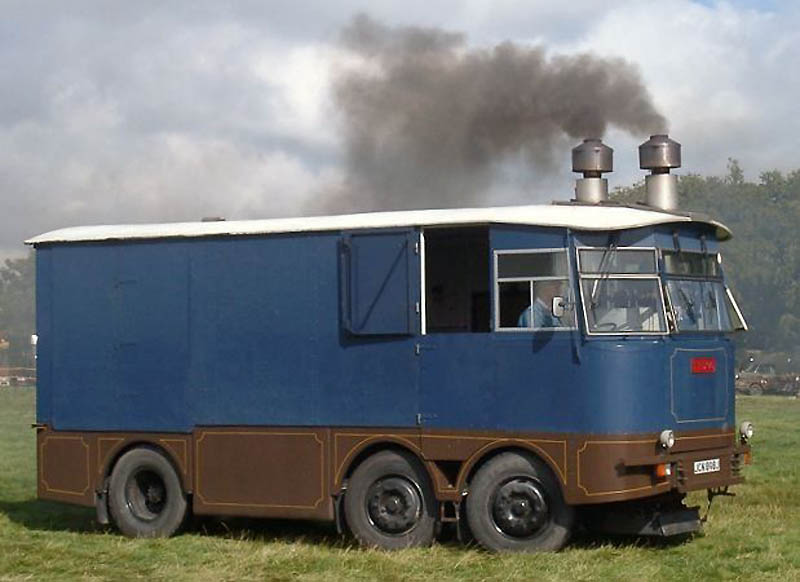
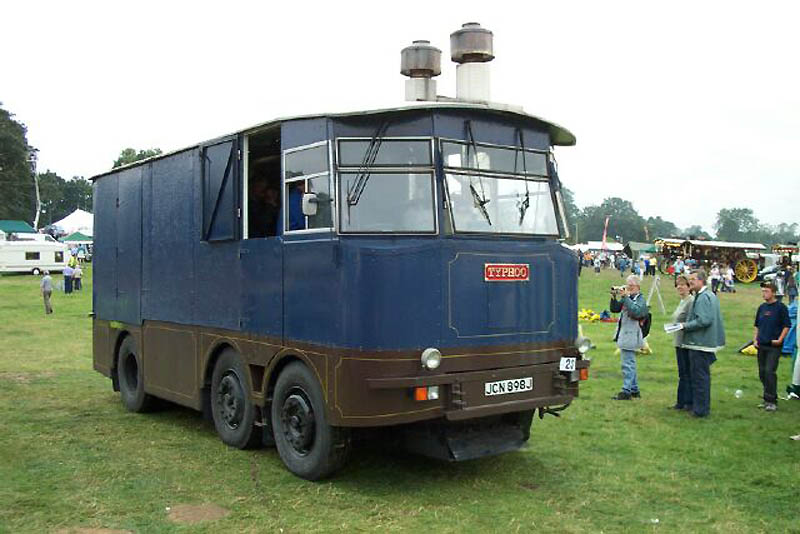
First, One Modern Example
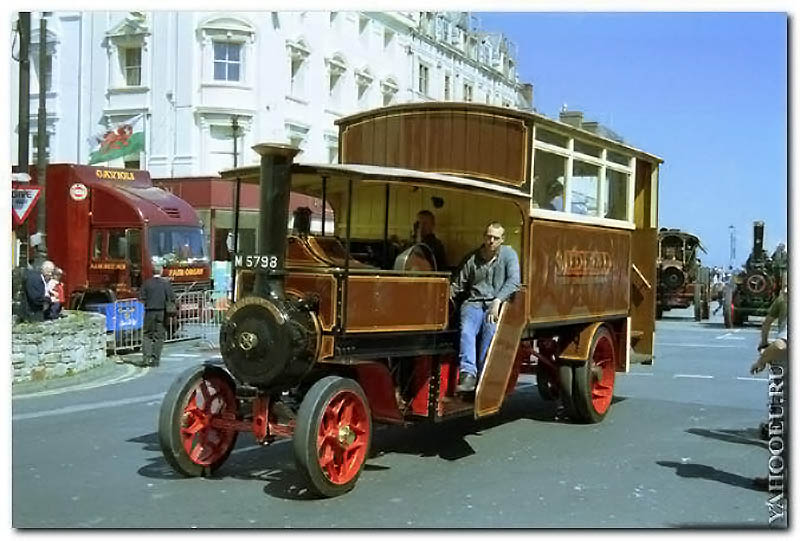
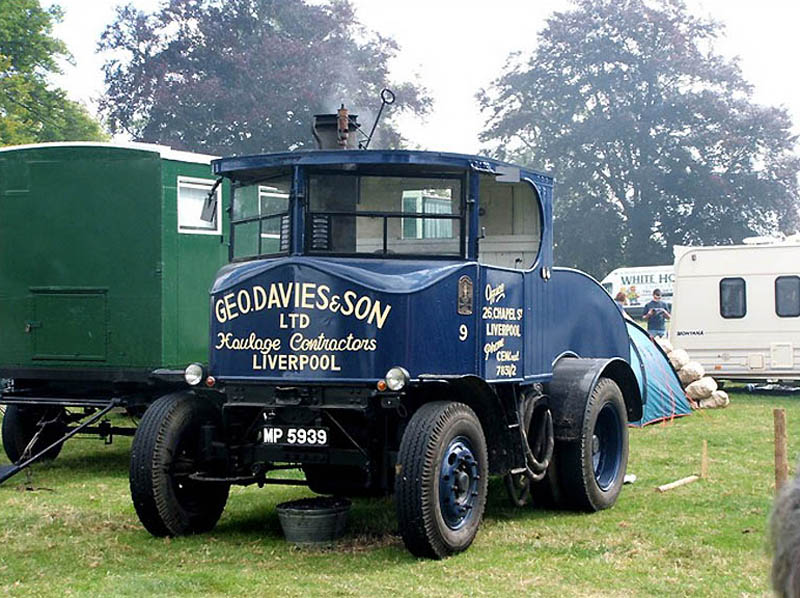
This bus took 10 years to build: Sentinel Typhoo is made from various tractor parts and powered by 100 horse power locomotive steam engine. This is already more than a tractor, less than a train, and exactly a bus - a moving, "breathing" hybrid machine.
Steam Bus History Highlights (based on material provided by Lord_K)
Perhaps the first in the noble line of steam transportation was this 1853 Dudgeon Steam Wagon:
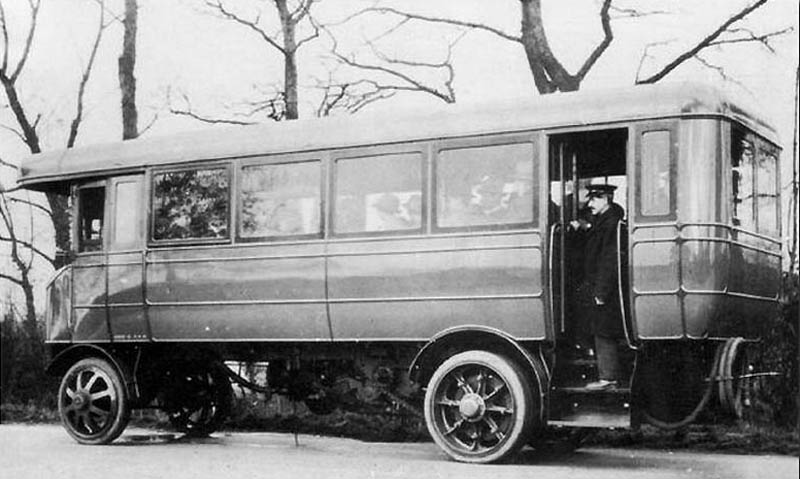
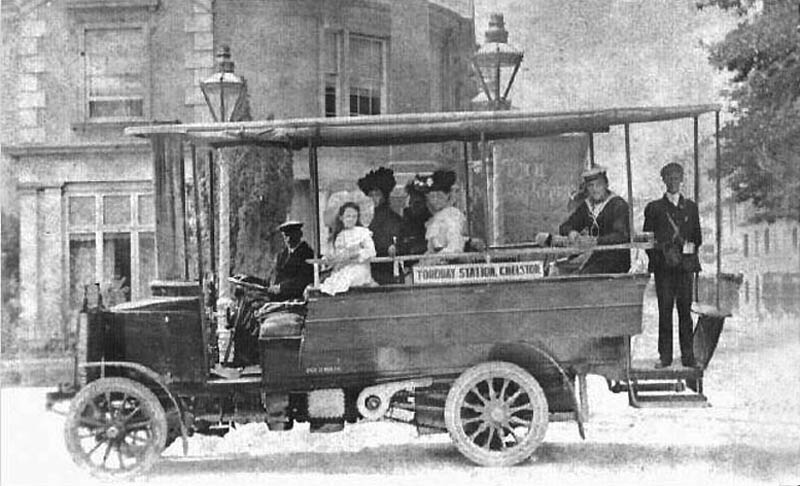
London Railroad employed steam buses to bring passengers to its stations: (Torquay and Staffordshire, 1904-1907)
(images credit: Reed Business Information)
Steam regular bus transportation in Paris: De Dion, 1907 -
Steam buses started to appear in London (based at Victoria Station) in 1898, mainly as an experiment. There were made by De Dion and lasted whole 2 years on London streets. They did not enjoy immediate popularity (perhaps for their loud steamy nature). Here is a steam bus Foden made from the tractor chassis, in 1913 -
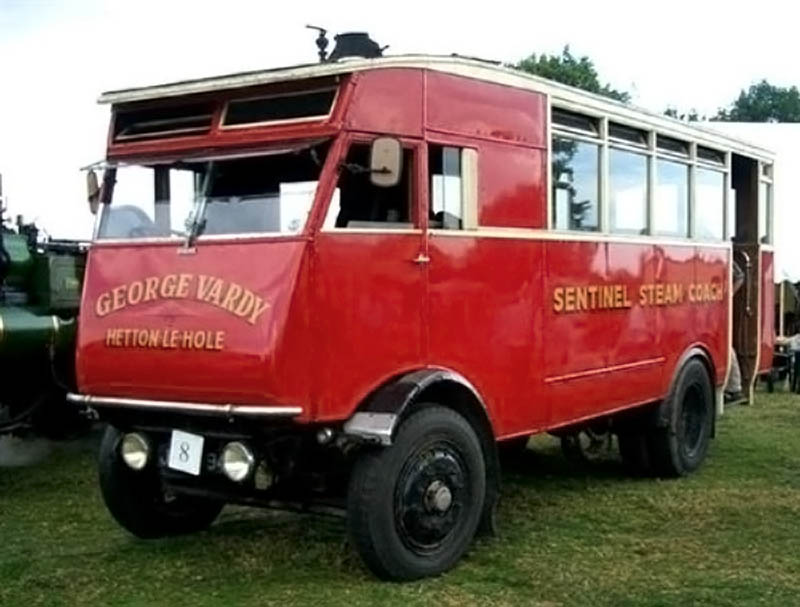
A couple of "Sentinel" steam buses, made as late as 1931:
More modern steam bus conversion: "Old Glory":
It was made from this steam truck "Sentinel DG-6" -
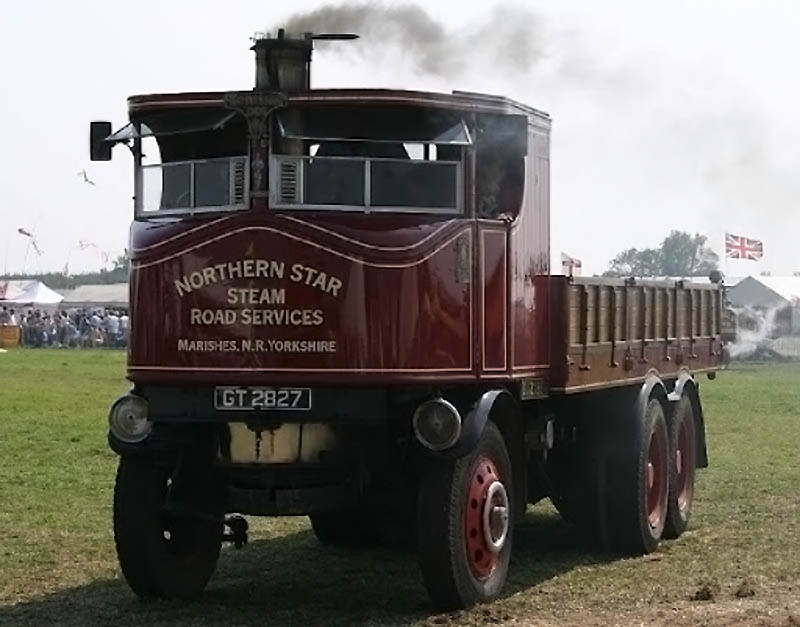
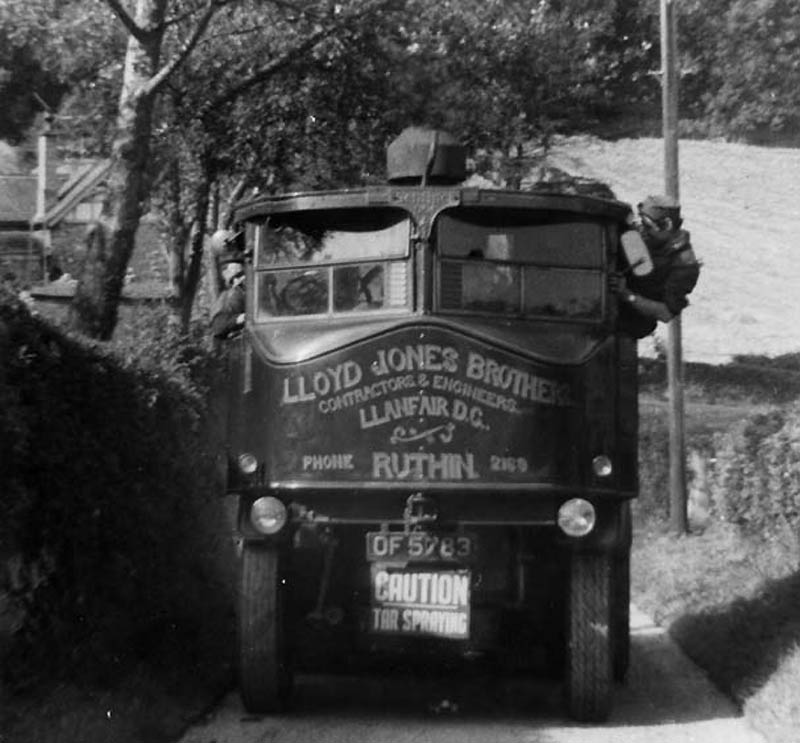
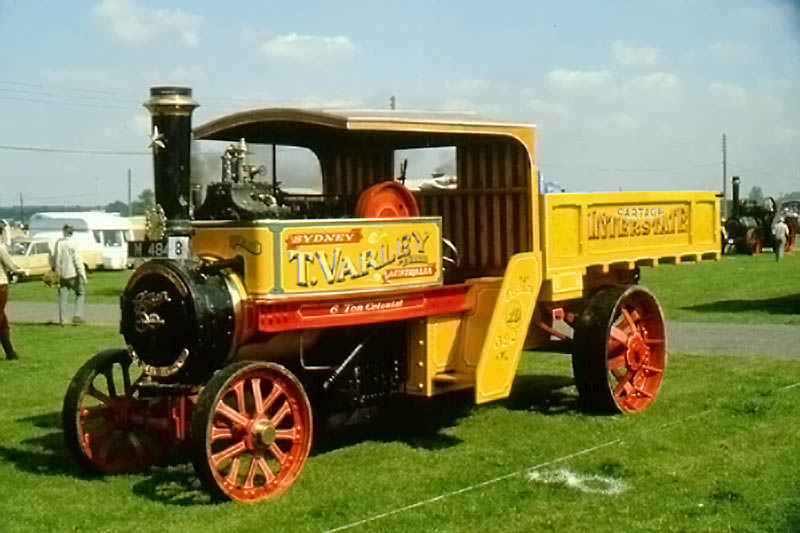
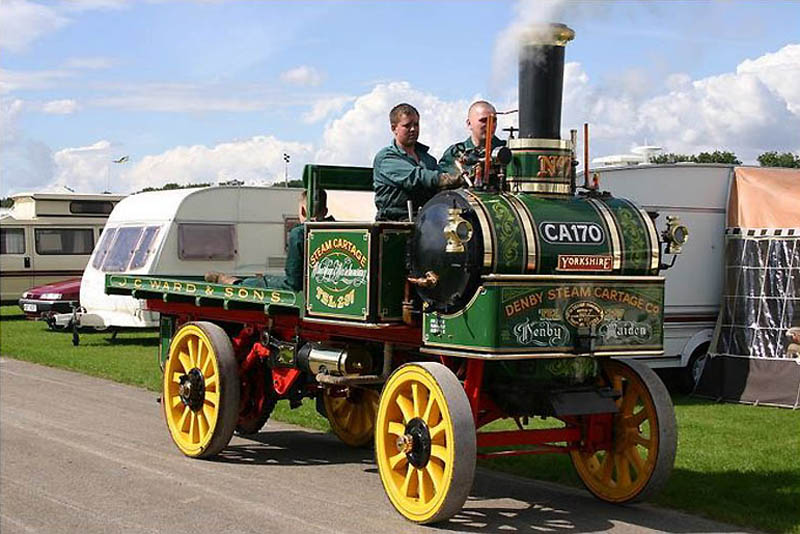
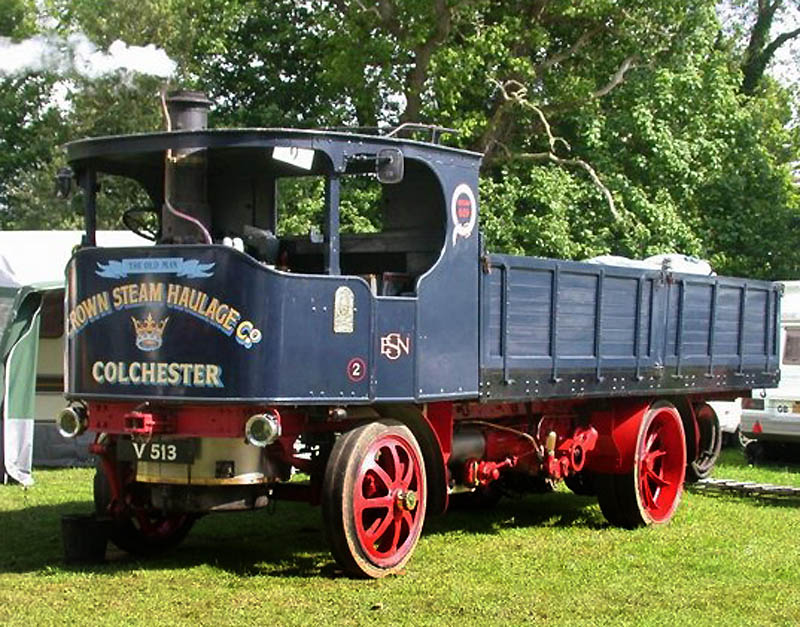
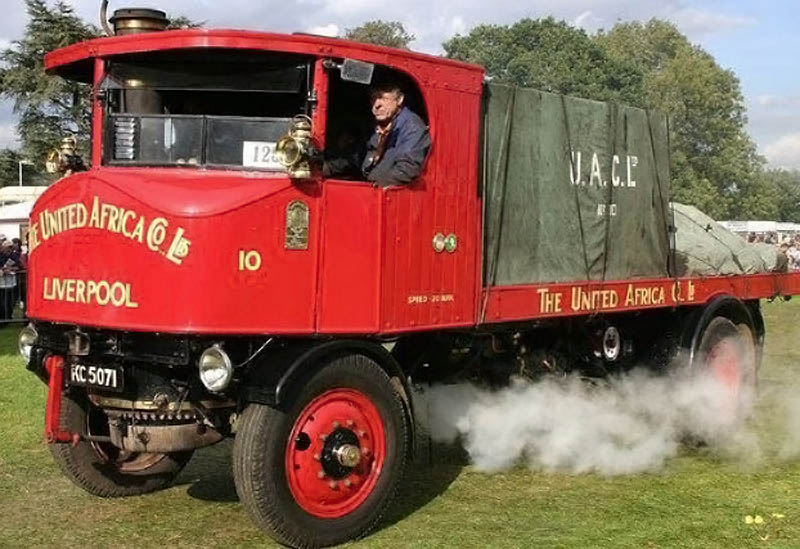
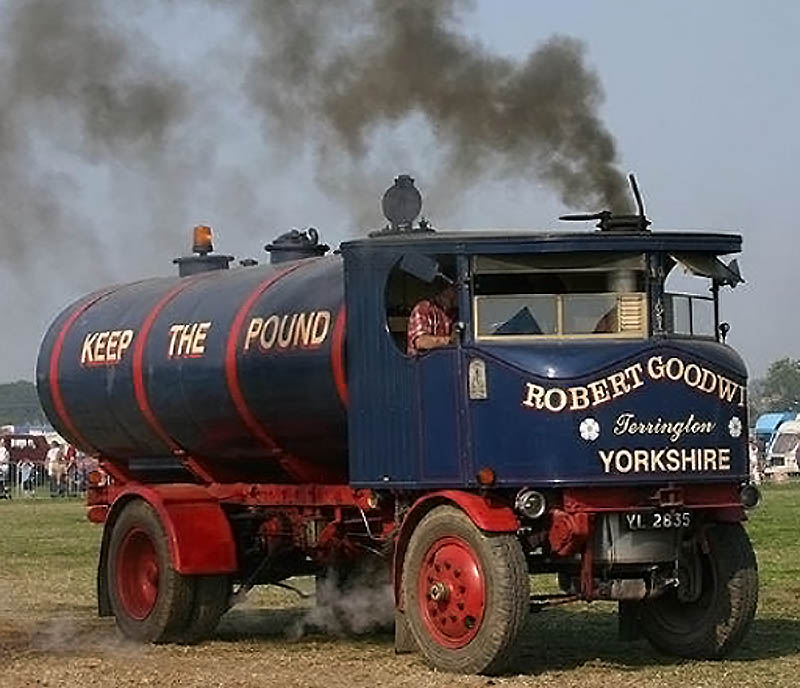
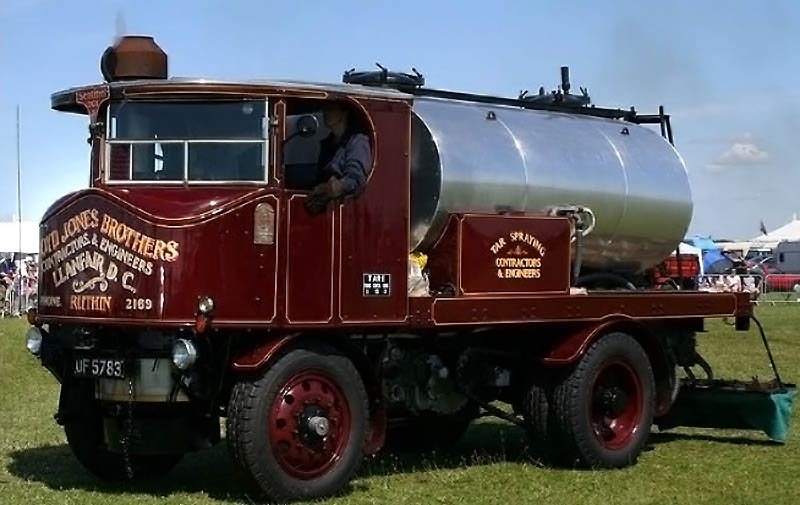
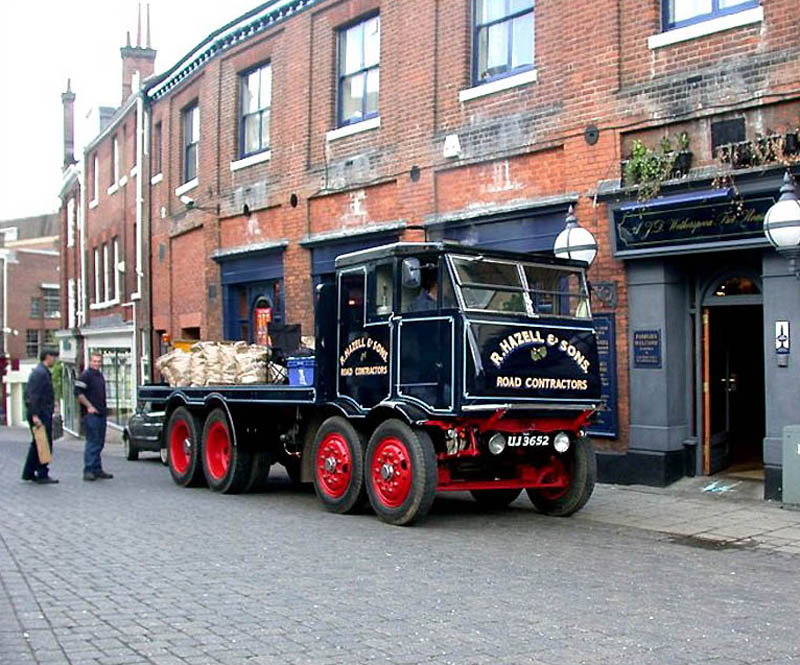
Sometimes called "locomobiles", they were produced in England as late as 1950, which certainly only shows the reluctance of engineers to abandon steam power as a viable means of on-road transportation. Starting in 1905, various models of steam-trucks, or "lorries" graced UK streets, not changing that much in appearance through the years:
Apparently, some of the "Sentinel" trucks were capable of doing 100 km/h and had up to 200 h.p.
Many steam trucks had brewery logos painted on their front and sides, as they were widely used for TRANSPORTING BEER. Somehow I love this little detail in their history.
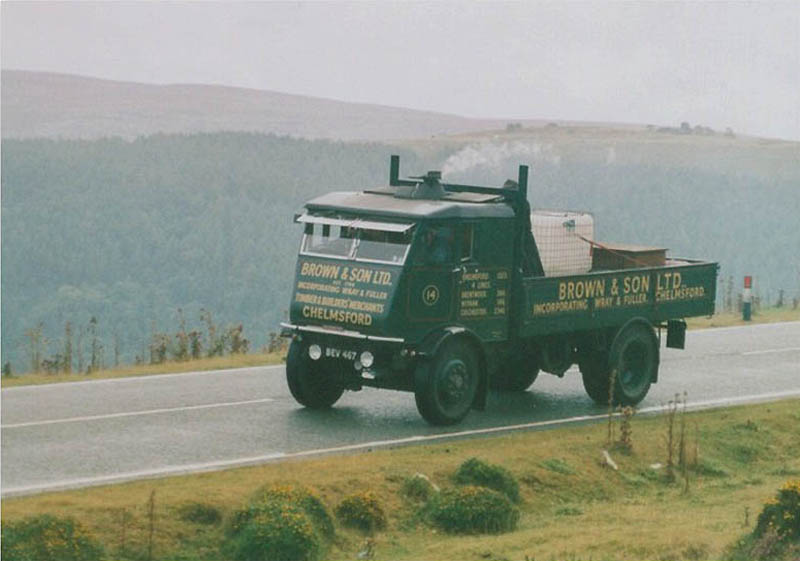
They looked pretty impressive on a foggy highway, early in the morning:
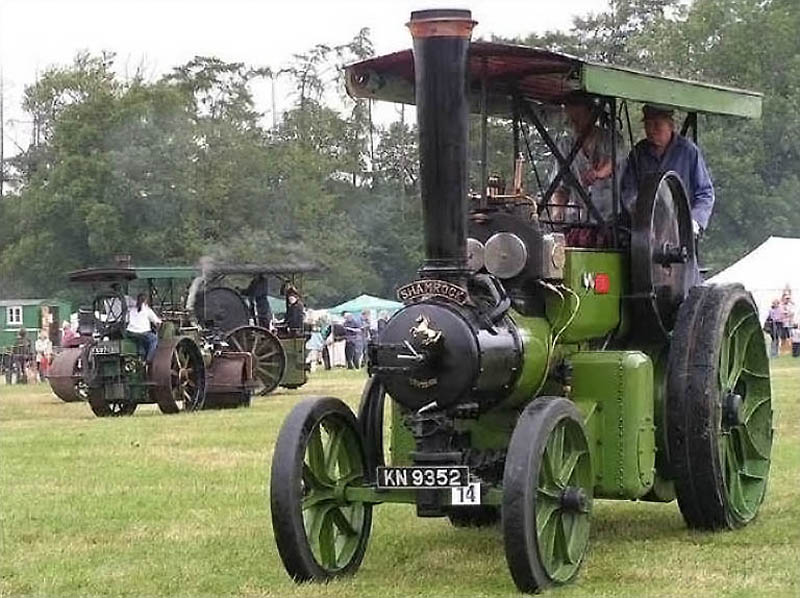
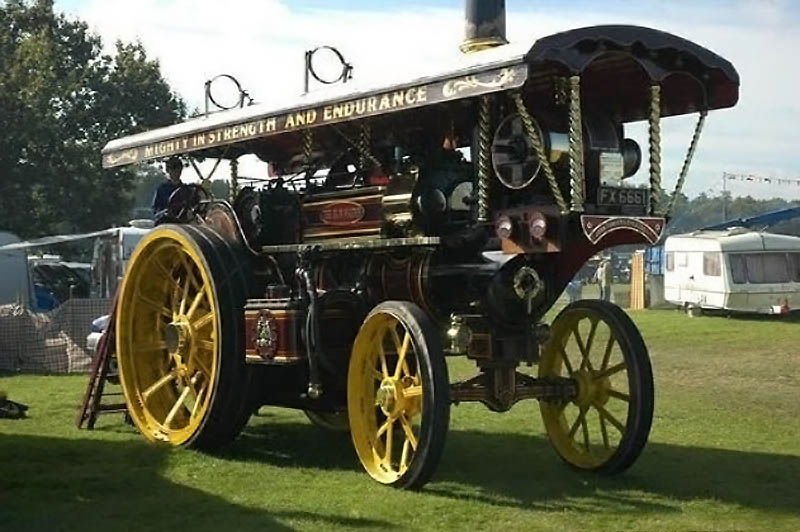
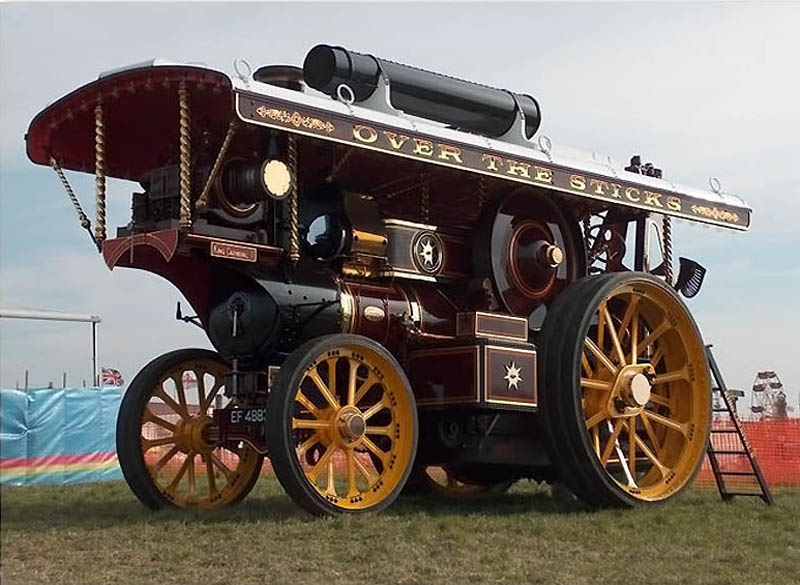
These were pretty curious beasts: wheeled vehicles with a locomotive steam engine. They're also called "Showman's Engines", because they often pulled behind them circus attractions, and once stationary, became a source of power for traveling fairs and carnivals.
Fowler Iron Maiden, 1920
Fowler King Carnival II, 1932 (images credit: Steam Scenes)
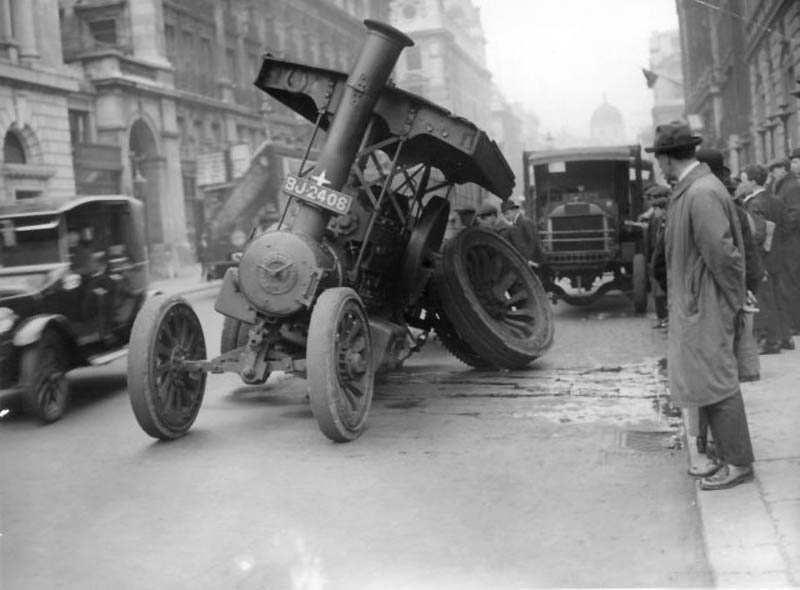
Antique Wrecks
Accidents from 100 years ago:
(image credit: ImageStudio)
Driving these vehicles was a piece-of-cake. All you had to do was watch for a stray chicken, be careful not to "run out of steam", and not to break the government-imposed maximum speed limit: (in some cases) the scorching 5 miles an hour!
My mum grew up on Romney Marsh during the 1920s and 30s. Some time around 1930 the whole school went on a trip to the seaside (which was only a few miles away) and travelled by flat car drawn behind a traction engine. Because of the very flat terrain, from their perch on the school wall they could see the puffs of steam and smoke and hear the chuffing for nearly half an hour before it arrived. The excitment for a bunch of rural children few of whom had ever been near a car let alone ridden in one must have been intense. Can't imagine the safety lot liking kids riding on an open flatbed but of course they only travelled at walking pace.
Smoke and ashes, yes. Loud, no. The old timers here preferred them for threshing because a man on the tractor could talk to a man at the rear of the threshing machine, 60-80 feet away. Try that with a gas tractor let alone a diesel. Besides, the fuel (straw) was free.
Keep in mind that 100 horsepower is a *lot* for a steam engine. They are the kings of torque. In most US tractor pulls team traction engines are ineligible to compete. Given their torque and weight, they go about as fast with the sled as without it. :-)
I've seen several of these vehicles. The Lake District steam bus was built up as a bus literally 1 mile from here. Fantastic vehicles. I'm a steam boat guy myself.
Great photos, thanks. However I really have to wonder why you think steam is in any way toxic or noxious - it is just hot water! Far, far less toxic than even the most cleaned-up catalytic-converter equipped gasoline or diesel motor.
As another poster pointed out, steam power tends to be quieter than internal combustion engines of equivalent power, and modern steam engine designs are remarkably fuel efficient.
Haha, that Global Subway map is an epic failure. According to it, Melbourne is in the middle of South Autralia, when in reality it's actually just south of Sydney. Whoever made it is obviously a fool.
You're an epic failure, the map wasn't made to be proportional, and if it was, who would care about Melbourne being in the wrong place when Africa is only a little bigger than that of Spain.
That's a cool transit map. If you enlarge the image, and read the text at the bottom, you will see it is from a new book that looks like it might be worth a look, too.
I wonder if our genius first poster noticed any other subtle distortions in the map. :)
Well I guess tehfix0r's confusion stems from the fact that Australian cities do not have a proper subway system, and is why he/she didn't get the inherit joke of the geographically compromised map. For instance the London Tube map is wildly out of scale, and makes understanding London's layout very difficult. I would suggest in future that you be a little less quick to judge others, tehfix0r. In accusing others of being fools, you brutally revealed your own ignorance...
About Flannery O'Connor: "a view of the world that mocks justice, that mocks philosophy, that mocks marriage, that regards these and all other human aspirations as not merely vain, but corrupt."
Flannery O'Connor was a devout Christian. Her fixation of human baseness and the vanity of human wishes is most likely a reflection on our fallen nature or something like that.
Or maybe, as a fervent catholic living in the South, she just disliked protestants!
Nice work. I prefer the near-future fiction pictures-- lots of great ideas. The retro future pic of the pyramid skyscrapers is really inspirational-- because it's actually feasible... with some urban planning-- what a skyline!
Flannery O'Connor is a writer about still-flawed future saints, and a God-haunted world awaiting its remaking by God. The grandmother story, for example, is the story of what it's like to suddenly be in the position of a martyr, from the point of view of the outside world. It is a naked sort of faith, shining in shards against the darkness, but with tons of darkness. She was pretty much sick, dying, and/or in pain during the bulk of her writing life, and she apparently had no taste for writing about people not in such condition.
O'Connor's letters are a great deal more approachable and gentle, although still challenging. Probably her most famous quote from them was her emphatic denial that the Eucharist was a symbol. "If it's a symbol, to hell with it!"
I am profoundly grateful that I did not read any O'Connor short story until middle age. She is all about hard grace. Hard like rocks upside the head.
PS: Do a search for "caracol" in Google Images and you'll notice why the "Los Caracoles" Pass is called so xD (I'm spanish and laughed when I saw the name)
There are definitely stretches along the White Rim Road through Canyonlands NP in Utah that compete with these road. Maybe not in terms of treachery over the entire length, but it's quite a remarkable thing. Here are two photos I took for reference: Photo 1 and Photo 2. I've actually posted quite a few images recently from my trips to the White Rim Road.
Aaaah. Or how about the Irohazaka Road in Nikko (Japan)? Not only does it look like this, they've got all the hairpins numbered and named, with little signs with flowers on them. A quite harrowing experience, and I wasn't even doing the driving.
Wow, I've been at the Tirana - Elbasan path! It was very dangerous, and I'm one of those who just don't feel safe in a car. Some truck-drivers drove like crazy and we saw two accidents on the way!
Agreed, I've being using PS for a decade and I can't find any evidence that the last image was tampered with. The shadows look healthy, other than the fact the image was taken with a medium-grade digital camera - or is highly compressed. I question Byrn's claim...
One note about the Skipper's Canyon road: the tourist buses definitely DO NOT go on that road. I used to live nearby and have been on that road several times. It was put in during the gold rush in the 19th century and really has had little work done since then. The blue vehicles shown in the one picture are the biggest ones that go out there. With that said, I agree that it is an awesome and hair-raising road to be on!
Also in NZ, though not as dangerous as it once was, is the Rimutaka Road (or as the locals call it, Rima-puka Road) between Wellington and the Wairarapa valley. It's been widened lately but still has its share of bad accidents.
One more is the Cardrona Road between Wanaka and Queenstown, though this too has been redone (paved now) so it has lost a bit of its original "charm" ;-) . Still enough to make you hurl when making the final descent into Queenstown.
I remember driving on the AlCan Highway before it was paved. The road from Dawson Creek, BC to the border of Alaska was all gravel road. 1,300 miles of fun! haha! I wish I had some pictures of the hot springs and the herd of Dall sheep. It was the experience of a lifetime for me!
The Alps in Northern Italy are the scariest I've been over. No railings of course, but what really got me were the shrines at the hairpins in memory of the people who didn't make it.
i went on los caracoles the day before yesterday... it's pretty tame even including the crazy driving at that spot. other parts along the road are less interesting but more dangerous.
The Caracoles I consider it comparing to others a quite safe route, and I drive fast. It is not the best but is much away of being a high risk route. Accidents are very unsusual. The one is worst than others is the way to go up to other ski resorts like the way to Farellones/Valle Nevado. 36 kms (22.3 miles) of curves through a 2 way traffic very narrow road. http://www.caleuche.com/Chile/IMAGENES/MONTANAS/CaminoFarallones.jpg
we drove down the Remarkables in heavy snowfall and were hugging the mountain so tightly that we crashed into a ditch. It's a terrifying road with sheer drops - that photo shows the safe part at the bottom as far as i can tell.
My heart skipped numerous beats driving up and down that mountain.
The last photo from Part 5 is from Turkey. The truck is from a city called Van, one of the easternmost city in Turkey and is just south of Mount Ararat and west of Armenia. And no, that photo is not photoshopped. :) Turkish villagers are known to do some stupid stuff once in a while..
The picture of the woman with a gun in her mouth was used in 1998 (in sepia) on the cover of the Beautiful South album "Welcome to the Beautiful South". The cover was changed for some markets, for obvious reasons, so it may not have been seen everywhere.
Huh. That picture of the Russian ship in trees is interesting. The Russians have a lot of ships on dry land around the Aral sea because they've diverted so much of the water for irrigating crops that they've ended up beaching boats in the middle of what looks like desert (well I suppose technically it is desert). But the trees are interesting, since it seems that if there wasn't water for the lake there wouldn't be water for the trees. I guess it could be a tsunami.
Of course in a likelihood it's probably just an old boat that was decommissioned and then moved out into the woods to serve as a party member's dacha.
The large cargo ship lying almost on its side is the Cougar Ace. A great article about its rescue can be found at Cargo Law.
The 47-foot motor lifeboats are self-righting under all conditions--they can be flipped completely upside down and they will right themselves quickly. While on a tour of the US Naval Academy in 1992, I saw a video of an actual test in which a lifeboat was flipped over and righted itself--maybe you can find this video around the Web somewhere.
lol... "no one could take a picture of a tsunami because no one survived" uummmmmmm... what about the 2005 tsunami- hundreds of thousands dead, millions of videos and pictures taken-?
There's a great write-up in Wired this month about saving the "Cougar Ace" boat that you have pictured under "Some ships fare worse than others:" (the one on its side)...
Uh, I live in Nova Scotia and have several friends in the Canadian Coast Guard. They don't do anything like what the US Coasties go through in training in Morro Bay, California
What a fantastic story, It amazes me how much power the ocean has. Some of the pictures you have posted are amazing.
I know that it isnt on the same scale as the pictures you have posted but I once got caught going across Moreton Bay in Queensland (Australia) we had 3 meter swells in the bay and we had to try and make it back from Moreton Island to Brisbane. If you are interested here is a picture from the trip. http://photos.birdfamily.id.au/?p=48
Got caught once in the Atlantic in December, north of 50, and got hammered by a massive winter storm. The scary thing is that waves never appear as big in photos...usually about 50% bigger in real life.
There is a famous photograph taken in the 50's of storm swell breaking on the headland north of Faial in the Azores. The waves / swells are in excess of 10 meters. The photo was taken as one of the swells crashed into the headland - the spray makes a perfect outline of a bearded man (Neptune) with amazing detail.
The Heinrich Behrmann (out of Bremen, Germany)beached herself near Ensenada, BCN, Mexico a few years back due to navigational errors. - She was unloaded by helicopters, a ditch was dug around and under her and she was successfully refloated by several tugs after about 3 months' hard work.
re: the basketball picture -- I'm guessing there used to be a basketball court there, with the floor mounted on those little brick pillars. But, it was abandoned and the floor scavenged by the locals, so all you've got left are the pillars.
The dragon is a fake, no surprise there, but it was created in the 1890s! http://www.smh.com.au/articles/2004/01/28/1075088090949.html?from=top5&oneclick=true
When I lived in Tucson Az I worked with a guy who's legal name was Obi Wan Kenobi. He was an actor and he said he changed his name to something people would remember. I have a Christmas card that he gave me that he signed as Obi Wan Kenobi.
12 Comments:
My mum grew up on Romney Marsh during the 1920s and 30s. Some time around 1930 the whole school went on a trip to the seaside (which was only a few miles away) and travelled by flat car drawn behind a traction engine. Because of the very flat terrain, from their perch on the school wall they could see the puffs of steam and smoke and hear the chuffing for nearly half an hour before it arrived. The excitment for a bunch of rural children few of whom had ever been near a car let alone ridden in one must have been intense.
Can't imagine the safety lot liking kids riding on an open flatbed but of course they only travelled at walking pace.
Smoke and ashes, yes. Loud, no. The old timers here preferred them for threshing because a man on the tractor could talk to a man at the rear of the threshing machine, 60-80 feet away. Try that with a gas tractor let alone a diesel. Besides, the fuel (straw) was free.
Stuff the hole in the ozone whatever it is, bring back steam power!
Keep in mind that 100 horsepower is a *lot* for a steam engine. They are the kings of torque. In most US tractor pulls team traction engines are ineligible to compete. Given their torque and weight, they go about as fast with the sled as without it. :-)
Some nice pictures there. thanks
look at this link,it's amazing:
www.freeweb.deltha.hu/zastava.in.hu/wood-gas.htm
Here is a great Video "Oil Drum" By Alan Shapiro
(Johnny Cash Recorded two of Alan's songs)
http://www.youtube.com/watch?v=F_zWyf9R0Qc
I've seen several of these vehicles. The Lake District steam bus was built up as a bus literally 1 mile from here. Fantastic vehicles. I'm a steam boat guy myself.
I see photos of two which my dad was involved in, in OF and MP. MP was his when he was a lad, photos are at:
http://pacificcoast.net/~wx732/Photos%20for%20Traction%20Talk/David's%20B&W/DavidsPhotos.html
(by the way, those are both waggons, with two g's. English is a flexable language when you invent the word)
James Powell
thank you James, I updated the post with your photo
Great photos, thanks. However I really have to wonder why you think steam is in any way toxic or noxious - it is just hot water! Far, far less toxic than even the most cleaned-up catalytic-converter equipped gasoline or diesel motor.
As another poster pointed out, steam power tends to be quieter than internal combustion engines of equivalent power, and modern steam engine designs are remarkably fuel efficient.
I thought I read somewhere that the first steam buses in London were used in 1831.
London
Post a Comment
<< Home