







































|








Scroll down for comments:
|
|
26
comments
 |
|
RECENT ARTICLES:

|
Visual Caffeine #8 Visual Caffeine, Issue 8 A thrilling blend of art, myths and technology |

|
Visual Caffeine #7 Visual Caffeine, Issue 7 A thrilling blend of art, myths and technology |

|
Art Deco Imperial Dreams: Art Deco Update Wings, Gears, & Glamorous Ladies |

|
1970s SciFi DRB Pics-of-the-Day Grand Space Adventure 1970s Art |
"Dark Roasted Blend" - All Kinds of Weird and Wonderful Things, Discovered Daily!"
DRB is a top-ranked and respected source for the best in art, travel and fascinating technology, with a highly eclectic presentation. Our in-depth articles in many categories make DRB a valued online magazine, bringing you quality info and entertainment every time you visit the site - About DRB
Connect with us and become part of DRB on Facebook and Twitter.
YOUR COMMENTS::
|
|

|
SF ART & BOOK REVIEWS: Don't miss: The Ultimate Guide to NEW SF&F Writers! Fiction Reviews: Classic Cyberpunk: Extreme Fiction Short Fiction Reviews: Lovecraft's "At the Mountains of Madness" (with pics) New Fiction Reviews: The Surreal Office |
READ OTHER RECENT ARTICLES:

|
Abandoned, Dieselpunk DRB Pic-of-the-Day Abandoned: Streamlined Three-wheeler |

|
Visual Caffeine #6 Visual Caffeine, Issue 6 A thrilling blend of art, myths and technology |

|
Visual Caffeine #5 Visual Caffeine, Issue 5 A thrilling blend of art, myths and technology |

|
Hellish Weather on Other Planets
Wild, Untamed, and Uncut |
|
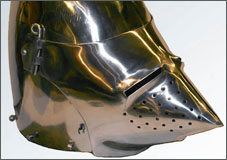
Medieval Suits of Armor
Metal Body Suits vs. Weapons of Medieval Destruction |
|
World's Strangest Theme Parks
Amusement to the (twisted) extremes! |

|
Enchanting Victorian Fairy Tale Art
"Then world behind and home ahead..." |

|
Adorable Pedal Cars
Collectable Pedal Vehicles Showcase |
|
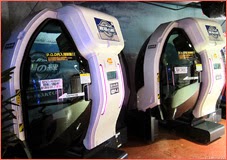
Japanese Arcades: Gundam Pods & Other Guilty Pleasures These machines have gone up to the next level |
|
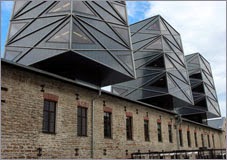
Modernist Tallinn Architecture Delicious blend of old and new! |
|
Early Supercomputers: A Visual Overview "Computers in the future may weigh no more than 1.5 tons" |
|
Futuristic Concept Cars of the 1970-80s French, Italian & Japanese rare beauties |
|
Epic 1970s French Space Comic Art DRB Time-Slice: Valérian and Laureline |

|
The Trees Are Escaping! The Abandoned Prison in French Guiana "Great Escape" from the Devil's Island |
|
FULL ARCHIVES (with previews, fast loading): 2022/16 2015/14 2013 2012 2011 2010 2009 2008 2007 2006 Link Lattes Feel-Good & Biscotti Issues |
|
CATEGORIES:
Feel-Good! | airplanes | animals | architecture | art | auto | boats | books | cool ads | famous | futurism | food
gadgets | health | japan | internet | link latte | military | music | nature | photo | russia | steampunk
sci-fi & fantasy | signs | space | technology | trains | travel | vintage | weird | abandoned


26 Comments:
think there was a bbc documentary on this. called to mars by abomb. they had footage from a small scale model test. it does work.
interesting because it takes the worry of weight out of the equation. instead of saving weight you build massive ocean liner level stuff because it no longer matters much.
it was canceled because the fall out is unacceptable amoung the other risks...
You'd think this project would immediately be called off instead of going as long as it did just by the fact that you'd severely pollute the atmosphere.
With a clean fusion bomb fallout wouldn't be a problem but yeah with dirty nukes, Quote: "Freeman Dyson, group leader on the project, estimated back in the '60s that with conventional nuclear weapons, that each launch would cause on average between 0.1 and 1 fatal cancers from the fallout."
Anonymous, as far as I know a H bomb is only "clean" because its fallout is small in relation to its destructive power. You still produce more than enough fallout simply because a fission bomb is needed as a detonator for the fusion. There is no clean nuclear weapon. The term "dirty nuke" can either refer to a fission bomb with relatively high fallout due to low efficiency or to a conventional chemical explosive with radioactive material around it. The latter thing does not cause a nuclear explosion, but scatters radioactive debris around. It is in no way suitable to power a spaceship.
You have to remember the TIME this was invented in.... people seriously thought this planet was going to be obliterated by nuclear war in the 1950s-60s.
And if there is a killer asteroid or extraterrestrial threat of any kind, it would be a last-ditch, everyone left behind is dead anyway, "When Worlds Collide" type of project.
The interwebs have been absolutely abuzz with talk about this project. I've seen it in a few documentaries and more than a few posts. I did love that TED talk tho.
We still need to solve the 'ol problem of traveling distances that would take tens of thousands of years however...
Thanks for the comprehensive post!
Austin
www.sosauce.com
There is no reason why we simply couldn't assemble such a device in Orbit and let fly from that vantage point.
Project Orion and NERVA should be group projects for graduate Nuclear Engineering students. There should be ways to vastly improve performance and lover costs on both of theose systems.
Launch from Earth? Of course not. However, as anyone who has ever read SF knows, space ships are most easily built in space.
The cuts in time to Mars and beyond will prevent a lot of radiation problems.
Oh yes, exploding atomic bombs in space will pollute it. How could I overlook something like that. Darn!
Remember, the Sun is a natural nuclear fusion explosion that's been going on for about 4.5 billion years. Aside from that, all matter emits some miniscule amounts of radiation. Getting a sun tan is in fact a radiation dosage. And burning coal puts a lot of uranium in the air, since it's a trace element in coal. So an Orion ship's radiation should be kept in perspective.
Building it in space removes most of the risk to earth. And Orion or a Nerva type nuclear rocket (much different) open the whole solar system to human exploration. Instead of trips lasting years one can get around between planets in weeks.
Eventually we're going to have to accept that politically.
Project 'Daedalus' from Great Britain was similar to this one.
Read Footfall! Great read too!
I've been a fan of Orion for decades. It's one of those Big Engineering concepts many engineers (and I am an engineer) are fascinated with. Adding to the attraction, the only thing keeping it from working is an international treaty.
Project Pluto isn't nearly as big, but has the advantage of being dead simple overall. One person working on it described the vehicle as being "...about as complicated as a bucket of rocks."
A ramjet is a very simple heat engine: cold air in, hot air out. For Pluto, the heat source was a nuclear reactor made from advanced ceramics, glowing bright yellow.
The sonic boom from this thing making a low pass would collapse most buildings. The radiation it emitted would sterilize the ground under its path. (Maybe a slight exaggeration there.)
They ground tested a developmental version of the engine, and seriously discussed building a test vehicle. That would have been dumped in the ocean after the flight. The realization that if they lost control of the thing it could fly over an inhabited area killed the idea.
Still, you have to wonder if maybe we could use it to explore the atmosphere of Venus, or one of the gas giants...
Stickmaker, really enjoyed your comment - told in plain terms, great overview
It's not a bad idea once you get off-planet. Someday, one of the export products spent up the space elevator will be nuclear bombs to propel enormous interplanetary vehicles.
this kinda thing is also a significant plot point in neal stephenson's anathem! that's where i first heard about it.
It's not a bad idea once you get off-planet. Someday, one of the export products spent up the space elevator will be nuclear bombs to propel enormous interplanetary vehicles..
The idea that Orion is inherently unclean is untrue. The reason a bomb can be dirty is the stuff that gets sucked into an explosion (including bomb casings) and then spread around. That is why normal ground-level detonations (where dust and soil gets sucked in) produce vastly more fallout than airborne ones.
In the late 50s, the calculation was 1 to 10 premature deaths per ground launch of Orion. That isn't 10 specific people die - but that 10 people would statistically die earlier than they otherwise would have.
I personally do not think that risk is unacceptable. Many thousands, perhaps hundreds of thousands, perhaps even millions, of people die prematurely every single year because of industrial pollution from cars, factories, industry etc. Likewise hundreds of thousands of peoples are killed or injured in road accidents, every single year. While these are tragic, nobody says the risk is unacceptable and we better give up cars/industry/technology and return to living in caves.
Anyway, another point is the risk can be further reduced today. A modern Orion would use a ground-based pusher plate to reduce fallout, and would use better/lighter bombs so less casings to be sucked in too.
The two remaining problems are EMP (electro magentic pulse), legal and political. The EMP problem can be solved by a sea launch say near the South pole. The legal issue is that it is illegal to take nuclear weapons in space or explode them - but this could be resolved by renegotiating international treaties if there was political will. The political problem is the biggest problem - many people, often regardless of how little they know about nuclear technology and nuclear science, are against anything nuclear, because it sounds bad to them or believing too much bad late night scifi.
The reason we need Orion is its the only way we can get a substantial presence in space. One Orion is equivalent to hundreds, even thousands, of conventional rocks. If we don't start using energy and resources from space (the first step of which is a large presence beyond the Earth), we are going to wreck this planet before too long.
huh?
1. materials don't BECOME radioactive do they? the dust and stuff from a ground explosion doesn't contribute to the "dirtyness" of the bomb does it?
2. why on earth would you LAUNCH with nukes? just use conventional rockets to get the thing into orbit (or just build it there) and then you can nuke away in space.
That 01-1-10 deaths figure would presumably have been calculated on the LNT (linear no threshold) theory of radiation damage. While that is still politically accepted the hormesis theory that at a low level radiation is actually beneficial has the evidence going for it.
http://www.jerrypournelle.com/archives2/archives2mail/mail311.html#hormesis
Did a speech in 80's including this method as alternative to STS. Also included matter/antimatter propulsion. Only problem I foresee is NASA's history of accidents! That would be huge..
yes, Jin, things do become radiactive when hit with enough nuetrons, cobalt is a pretty nasty example
what a waste. why they didn't use more sensible inertial drive. its most idiotic to blast behind spaceship when there are lots of other ways to do it. the main goodness of inertial drive is that it can be used in closed system, there is no need for interaction with outside-spaceship environment.
I would argue that a clean fusion bomb would be possible, if it could be detonated without a fission trigger. This is theoretically possible, but I've never heard of anyone being able to do it. If it could actually be done, it would naturally be top secret, to avoid terrorists/enemies etc exploding cheap nukes that don't require difficult to obtain plutonium or U235. No doubt it would be too big and clumsy to make a useful weapon, but it wouldn't really matter to Orion if each propulsion unit weighed a couple of tons.
the main advantage of orion is its lift capacity. If you use multiple chemical boosters to carry Orion into space you lose its primary advantage. Jerry Pournelle suggested to me that a sea launch would avoid a lot of fallout. Also, a ground launch with a thick metal pad coated in graphite would produce very little irradiated dust. I wrote this Orion article 10 years ago. http://www.spacedaily.com/news/nuclearspace-03h.html
Nuclear fission bombs are crude and inefficient ways to convert mattter into energy, the best current way is to use antimatter and feed the explosion continually by injecting it. Now you only use a nuclear plant to power the antimatter production. This all could be build in space. Once the scientist concentrate on the production of antimatter, the output would be far grater dan todays, since this is not a prority nower days. The difficult part would be to transport the antimatter from production plant to explosion whitout the need of storrage, the existence of antimatter is to short
A few important points to let us really appreciate Orion.
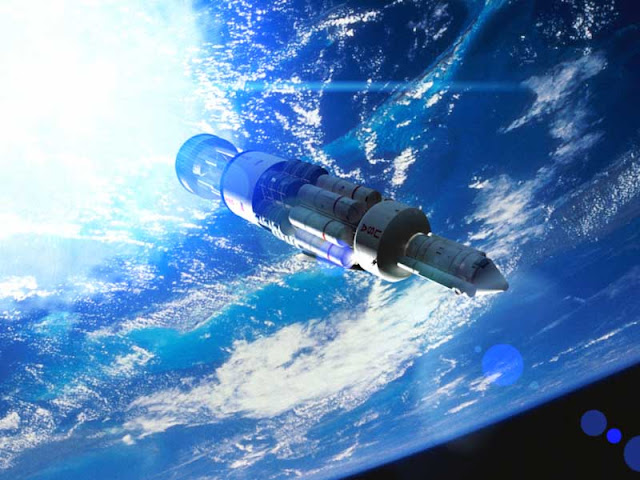
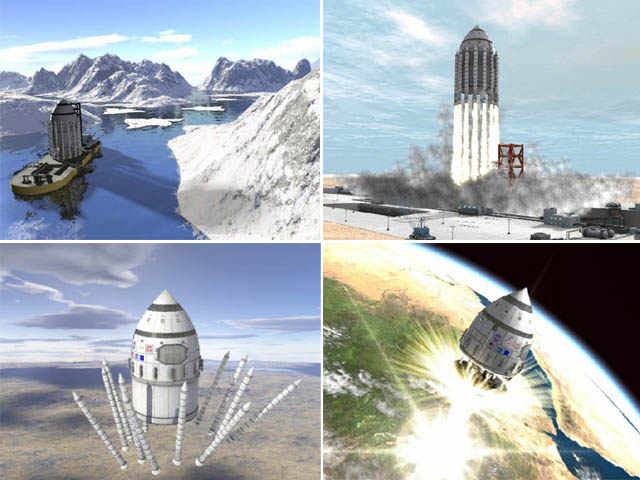
If a dinosaur-killer were on a trajectory on the way in, we could do even the big ugly ground launch ships up to 16,000 tonnes at lift-off. Dyson determined that they would add a few percent to the amount of fallout being released into the biosphere back then, for a series of ≈5000 tonne ships over a decade or so. "Mars by 1965, Saturn by '70" was what they hoped.
Lacking such an existential threat and in the modern era, we could still lift a smaller ship sectionally to orbit, so it's only fired off above the Van Allen Belts, if anything above LEO matters.
A cargo ship (made up of several Saturn-V class boosters' loads in LEO) for the mission package goes out on a minimum-energy trajectory and goes into Mars orbit with over 75% of the mass in LEO being payload. The crew go when the two planets are physically closest, taking 21 days to jump across to Mars and brake from cometary speed into orbit. In a ship consisting mostly of pulse units, with a hab just as big as they can cramp into for the run.
If we take care of the trash and don't leave huge radioactive trash heaps lying around as the cold warriors did making the pits and tritium of their weapons, our effect is to blow weapons-grade fissionable fuels away into the Solar wind, opening up the Solar system. Hopefully proving the way to removing all the heavy, polluting industry off-planet for a hopefully indefinite future for Human and all Gaian life.
Space colonies as far out into the Kuiper belt & beyond are possible, only needing a bigger mirror.
The Penn State Physics dept have a paper about anti-proton catalyzed sub-critical mass of U235, micro-fission pulse rocket. A telescope array at 520 AU, using the Sun's gravitational lens, could see Earth-sized planets or storms on Jovian planets, at the distance of the Galactic Core regions. A good reason for a research institute.
O'Neill worked out an iteration of the early Island One Bernal Sphere colony with a mirror mass limited to no more than 3X the GCR shielded hab at 720 AU (4 light-days) as an arbitrary "continental shelf" for habitats around the Sun.
Even so far out, such comet-eating colonies aren't forever completely physically out of touch with other colonies or Earth.
Modernized advanced versions of Dyson's Super Orion (possibly Magnetic Sail-coupled instead of physical interaction with the plasma jet from the bomb) make lousy starships with only .1C Δv. Still, that makes a ship which at cruising speed, covers 200 AU in 34 days.
Criswell wrote about Oort halo & interstellar comet-eater colonies (what are called Macro-Life)
eventually becoming the vanguard of interstellar colonization, even if many generations removed from Earth. Out there, the Sun is only a partricularly bright star, and there are others brighter to point your mirrors at. A colony of 500 to have a high-energy standard of living needs mirrors that would span from Gibraltar to Lebanon, the Alps to North Africa (but it's only a few moles' thickness film).
If any colony can be sustainable for long enough to get to the next icy chunk to replace losses and grow & reproduce. It has to be able to make everything they need or be dependent on commerce.
A particular ship & crew or colony & population would never make the trip between stars (until technology advances) but anywhere industry is possible and fissionables and propellant are available, the ships keep them in touch with their neighbors.
Post a Comment
<< Home