







































|














Scroll down for comments:
|
|
15
comments
 |
|
RECENT ARTICLES:

|
Visual Caffeine #8 Visual Caffeine, Issue 8 A thrilling blend of art, myths and technology |

|
Visual Caffeine #7 Visual Caffeine, Issue 7 A thrilling blend of art, myths and technology |

|
Art Deco Imperial Dreams: Art Deco Update Wings, Gears, & Glamorous Ladies |

|
1970s SciFi DRB Pics-of-the-Day Grand Space Adventure 1970s Art |
"Dark Roasted Blend" - All Kinds of Weird and Wonderful Things, Discovered Daily!"
DRB is a top-ranked and respected source for the best in art, travel and fascinating technology, with a highly eclectic presentation. Our in-depth articles in many categories make DRB a valued online magazine, bringing you quality info and entertainment every time you visit the site - About DRB
Connect with us and become part of DRB on Facebook and Twitter.
YOUR COMMENTS::
|
|

|
SF ART & BOOK REVIEWS: Don't miss: The Ultimate Guide to NEW SF&F Writers! Fiction Reviews: Classic Cyberpunk: Extreme Fiction Short Fiction Reviews: Lovecraft's "At the Mountains of Madness" (with pics) New Fiction Reviews: The Surreal Office |
READ OTHER RECENT ARTICLES:

|
Abandoned, Dieselpunk DRB Pic-of-the-Day Abandoned: Streamlined Three-wheeler |

|
Visual Caffeine #6 Visual Caffeine, Issue 6 A thrilling blend of art, myths and technology |

|
Visual Caffeine #5 Visual Caffeine, Issue 5 A thrilling blend of art, myths and technology |

|
Hellish Weather on Other Planets
Wild, Untamed, and Uncut |
|
Medieval Suits of Armor
Metal Body Suits vs. Weapons of Medieval Destruction |
|
World's Strangest Theme Parks
Amusement to the (twisted) extremes! |

|
Enchanting Victorian Fairy Tale Art
"Then world behind and home ahead..." |
|
Adorable Pedal Cars
Collectable Pedal Vehicles Showcase |
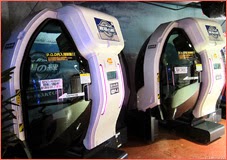
|
Japanese Arcades: Gundam Pods & Other Guilty Pleasures These machines have gone up to the next level |
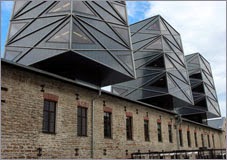
|
Modernist Tallinn Architecture Delicious blend of old and new! |
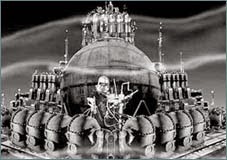
|
Early Supercomputers: A Visual Overview "Computers in the future may weigh no more than 1.5 tons" |
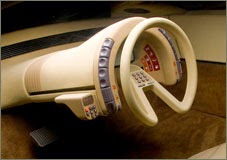
|
Futuristic Concept Cars of the 1970-80s French, Italian & Japanese rare beauties |
|
Epic 1970s French Space Comic Art DRB Time-Slice: Valérian and Laureline |
|
The Trees Are Escaping! The Abandoned Prison in French Guiana "Great Escape" from the Devil's Island |
|
FULL ARCHIVES (with previews, fast loading): 2022/16 2015/14 2013 2012 2011 2010 2009 2008 2007 2006 Link Lattes Feel-Good & Biscotti Issues |
|
CATEGORIES:
Feel-Good! | airplanes | animals | architecture | art | auto | boats | books | cool ads | famous | futurism | food
gadgets | health | japan | internet | link latte | military | music | nature | photo | russia | steampunk
sci-fi & fantasy | signs | space | technology | trains | travel | vintage | weird | abandoned


15 Comments:
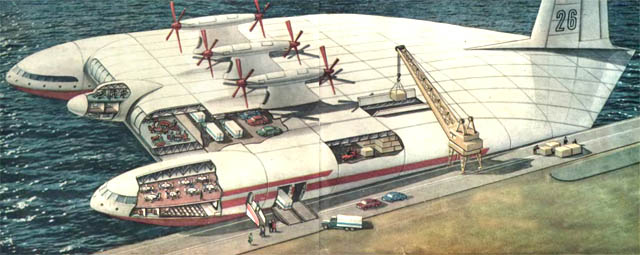
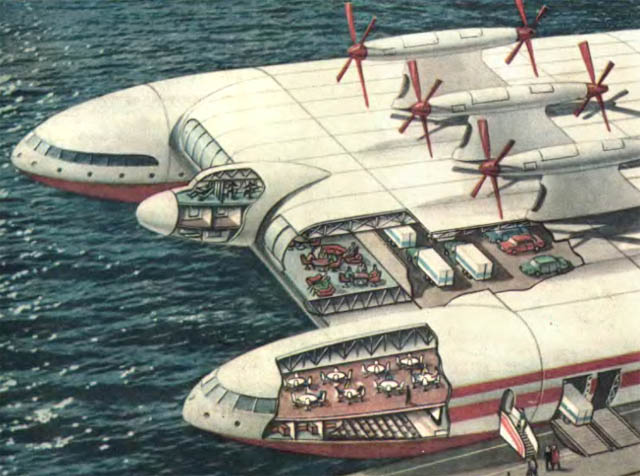
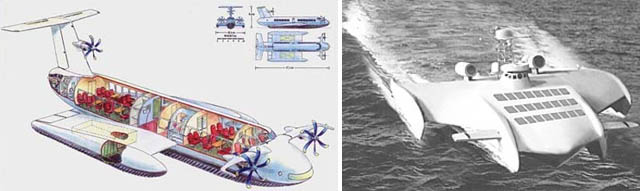
Brilliant, some great photos and illustrations. I am a firm believer in this technology and can't understand why it is not being advanced further.
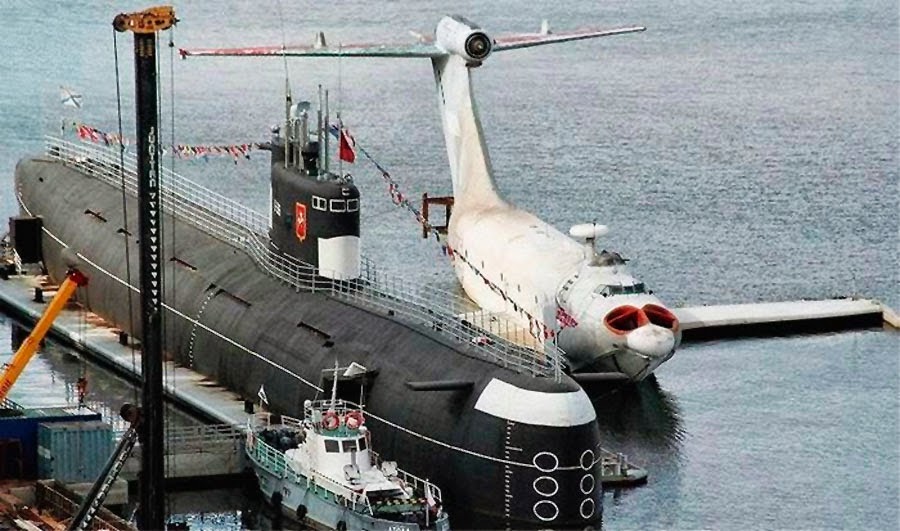
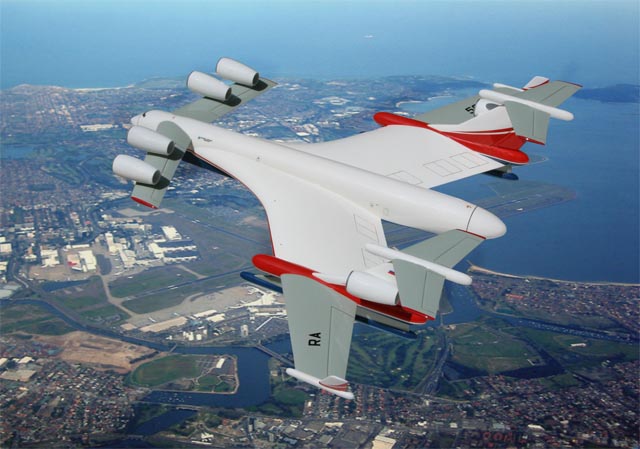
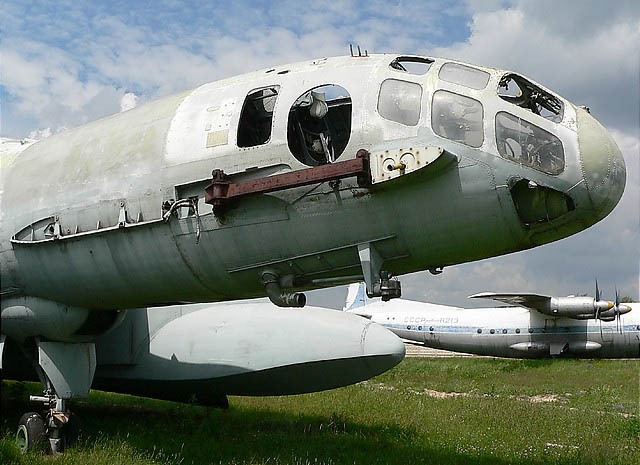
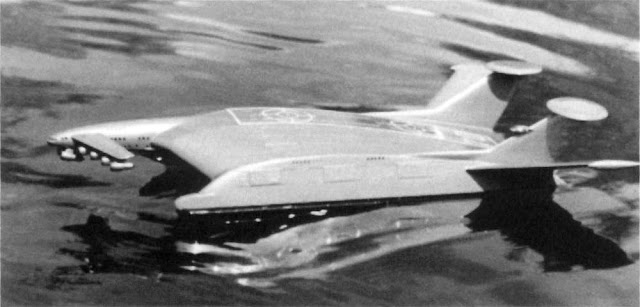
Is there a link to a higher-rez version of the first photo? I looked into the guys flickr page but he has too many photos and I can't find it.
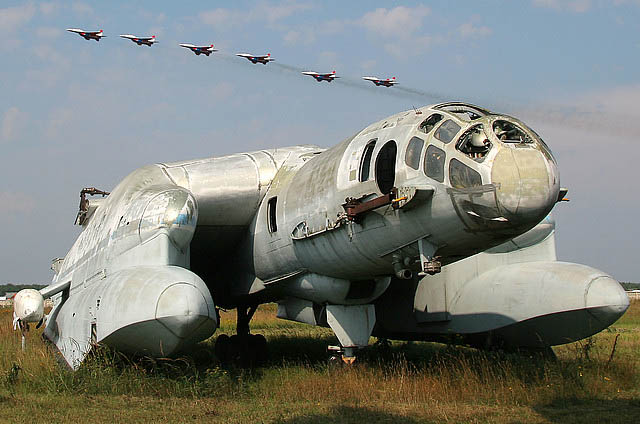
ah poor abandoned VVA 14! should be cared much. any geeky millionaire out there?
The proper rendering of the acronym is "Wing In Ground effect".
A high-flying aircraft's wings force the air downward, and the reaction (Newton's Law) holds the plane up.
Close to the ground, the downward-moving air hits the ground and rebounds. The upward-moving air adds a bit of energy back to the system; that is the "ground effect". If the wings are in the ground effect zone, the ekranoplan doesn't need as much power to fly.
The bigger and heavier the ekranoplan, the more air is forced downward and the stronger the ground effect. A big one is therefore safer, because it can go higher. An ekranoplan makes its entire flight in what is actually takeoff and landing mode for a "normal" airplane, and takeoff and landing are the most dangerous parts of the flight.
Regards,
Ric
orly? o no.... k
Before chatspeak, there were Russian planes.
Elise: great explanation of the "Orlyonok" name origin. lol.
Avi thanks a ton for putting up another Ekranoplan showcase. I love planes, but I love Mother Russia's planes even more. Great job!
Vadi,
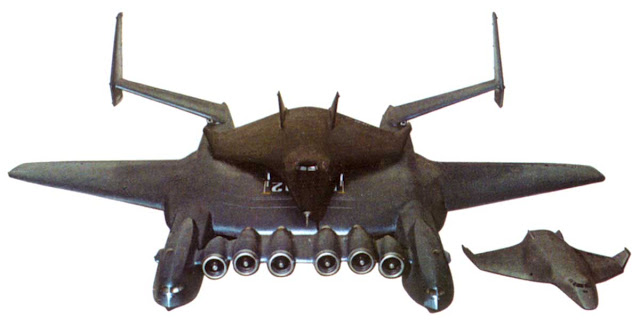
Another link to the first image - from the artist's official site:
here
(click on 'view hires gallery)
another great article, DRB!
I'm not an airplane geek, I'm just a science fiction geek, but if someone would put out a line of these in small plastic models, I'd definitely be hooked and start building and collecting them!
Some of those look straight out of Mobile Suit Gundam---not at all surprising when you consider that many designs in Japanese anime are inspired by Russian rocket and aeronautical designs. Thanks for a great pair of articles on one of my favorite planes! (boats?)
Here the information and a photo Ekranoplans:
http://images.yandex.ru/yandsearch?p=0&ed=1&text=%D0%AD%D0%BA%D1%80%D0%B0%D0%BD%D0%BE%D0%BF%D0%BB%D0%B0%D0%BD&stype=image
what if cold war continue? i think more plane will develop undercover both side
Re Terry's question about model kits, Revell produced a model of the Orlyonok in 1/144th scale. Not currently in production but not hard to find second-hand: http://www.cybermodeler.com/hobby/kits/rm/kit_rg_4609.shtml
More on the kits front: a company called Anigrand make models of the KM, Lun and VVA-14 in 1/144th scale. Bear in mind however that these are limited-edition resin kits, not injection-moulded plastic, they require different modelling skills and they arn't cheap:
http://anigrand.com/catalog_HB-1.htm
Does anyone know of a build it at home kit or plans. I'd love to try it
T.
Post a Comment
<< Home